

Attending the Early Childhood Conference and a Digital Marketing Workshop
When I decided to come to Singapore, I was keen on learning about educational policies and the tech scene in a different region of the world. Through my job at Tinkertanker, I’ve been able to partake in a whole array of cool events that have provided me with valuable insights in these areas. I’ll take this article to highlight two that I’ve recently attended — the Early Childhood Conference and a Digital Marketing Workshop.
Early Childhood Conference
At the Early Childhood Conference in the beginning of October, I helped my colleagues facilitate the PlayMaker workshop. In this workshop, conference attendees (early childhood professionals) learned about Singapore’s PlayMaker program. Through this program, developmentally appropriate tech toys were brought into kindergartens to integrate technology into school curriculums. As part of this conference workshop, there was a hands-on activity that involved introducing the early childhood educators to LED circuit stickers and copper tape, tech tools that introduce the ideas of circuits and electronics through the means of arts and crafts.
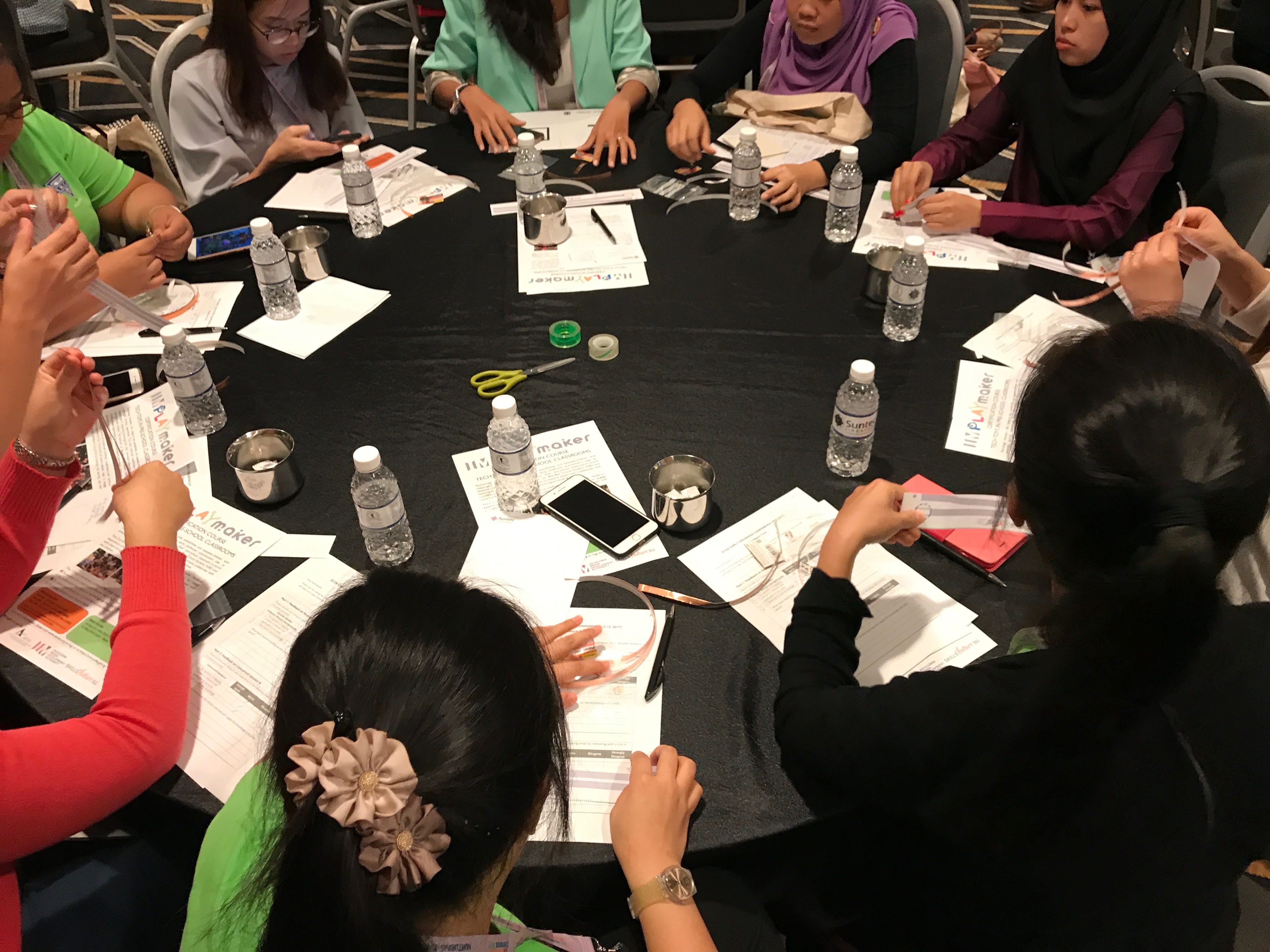
PlayMaker workshop at the Early Childhood Conference
Helping to facilitate the workshop allowed me to interact with a fairly large population of early childhood educators. It was interesting to see their reactions to the circuit stickers activity. Some took to it very quickly and were really interested in the whole idea of it. Others were not so enthusiastic or were confused about how the circuit stickers worked. It’s become fairly clear to me that in order for a program like PlayMaker to deliver the most impact, the educators using the tech tools in their classrooms have to be excited about the tech they are using. If the educators aren’t enthusiastic, the chances are a lot larger that the students won’t be either. In a previous piece I’ve written, I asked a question: if educators are uncomfortable with the materials they are teaching, how can young students gain a firm grasp on the material as well? I’ll push this question further: how can we get educators who aren’t super comfortable with tech to be excited about learning and using it? Can we craft a learning environment or program that teaches and sparks interest in technology to adults who previously have not had much exposure? These questions are difficult to answer, but are important to consider.
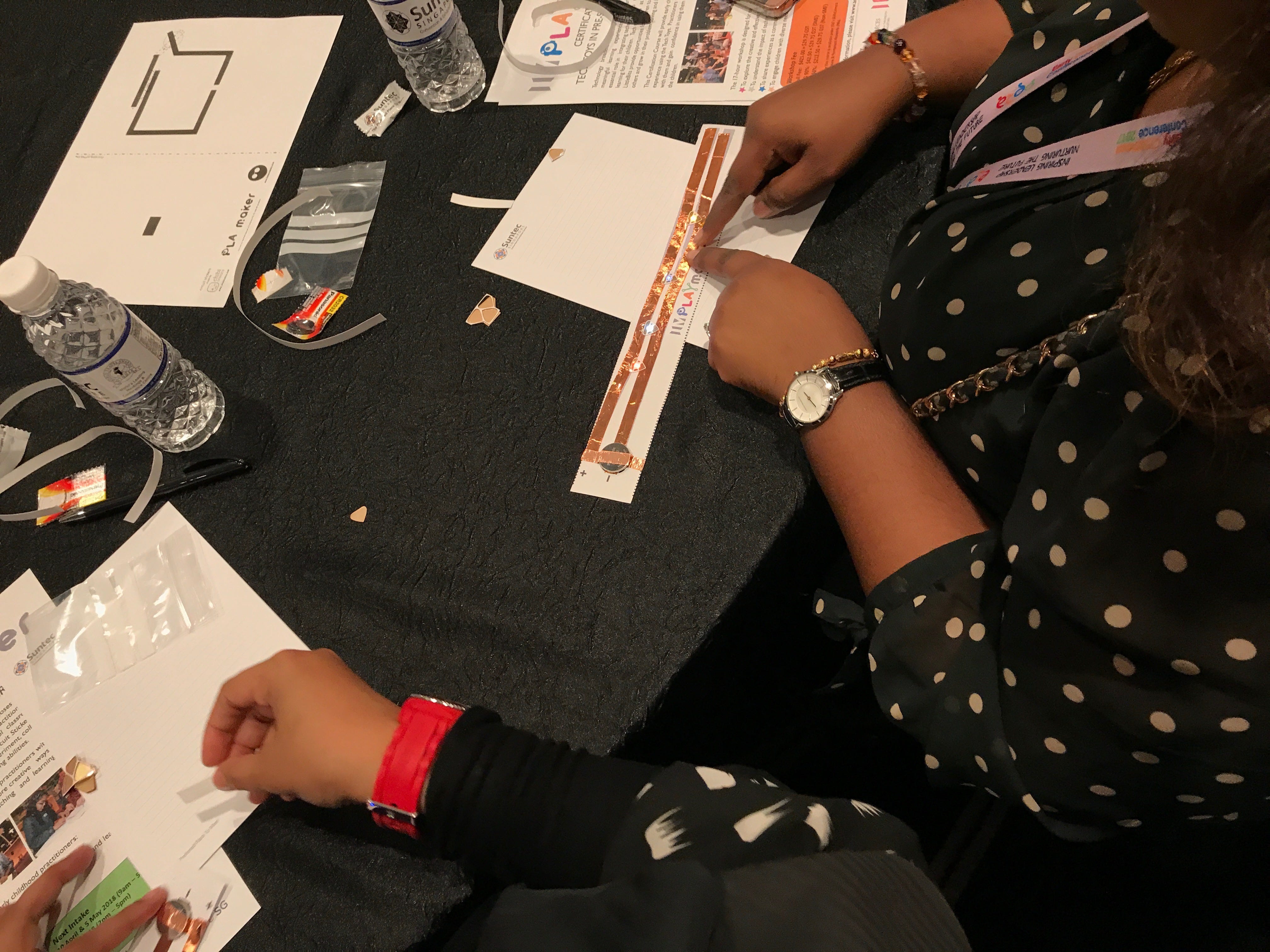
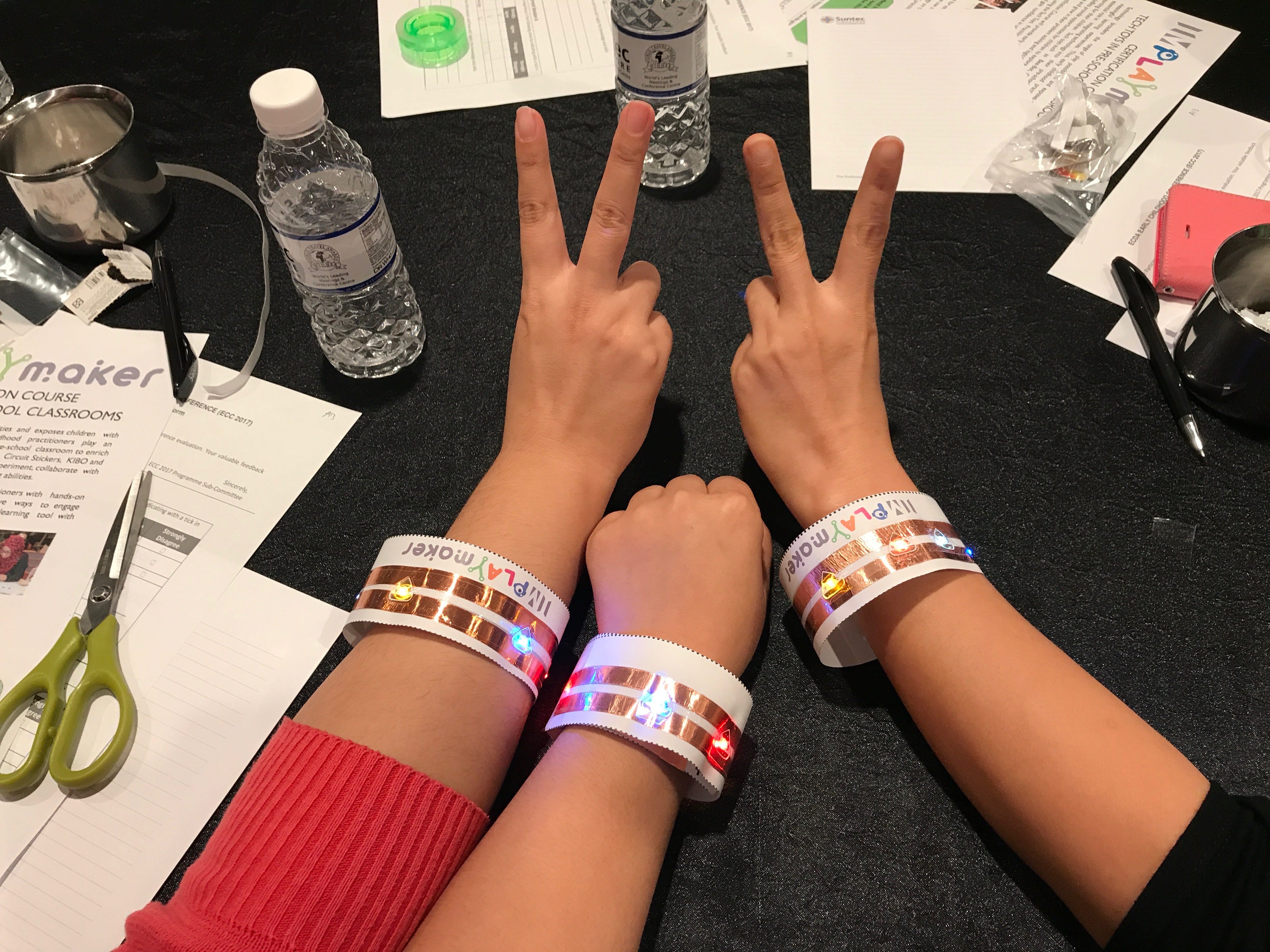
Workshop project in progress (left) and final product (right)
Digital Marketing Workshop
As a lot of my work is focused on marketing Tinkercademy programs, I attended a digital marketing workshop specifically geared towards small and medium businesses in Singapore. The event spoke a lot about “digital disruption” and how to use Google’s advertising platform. While some parts of the workshop felt very much like a sales pitch to use particular web services and was not as “hands-on” as I would have liked it to be, I did learn more about the tech scene in Southeast Asia and useful resources for digital marketing.
A handful of interesting facts from the workshop:
- The 3 largest contributors to the SEA Internet economy are online travel (hotel bookings, flight bookings, ride sharing, etc.), e-commerce, and online media (games, online advertising, etc.)
- SEA currently has 260 million users and is predicted to have 480 million users by 2020 — contributing to SEA being the world’s fastest growing Internet region
- There are 3.2 internet-connected devices per person in Singapore, making it the country with the most devices in Asia
- 60% of consumers in Singapore use a search engine to get informed before making a purchase
- On average, Singapore consumers look at 5–6 sources of information before making a purchase either online or in-stores
- 53% of users will leave a mobile site if it takes 3 seconds or longer to load
- The average time it takes to fully load a mobile page is 22 seconds (Singapore)
Some useful digital marketing resources by Google:
1. Consumer Barometer: https://www.consumerbarometer.com/
→ In the workshop, I was introduced to this tool that provides insights on consumers and how people use the Internet.
2. Think With Google: https://www.thinkwithgoogle.com/
→ This is a useful site that talks about best practices and case studies, which is helpful when forming a strategy for digital marketing initiatives. There is a lot to be learned from past experiences and events.
3. Test My Site: https://testmysite.thinkwithgoogle.com/
→ The speaker talked about this tool that tests a mobile website’s speed and performance. In a mobile-first world, understanding how a mobile site performs is critical. Currently, this app tells the user how a particular site performs on 3G; it would be great if it could also test performance on 4G.
There are many other resources out there with pointers in optimizing digital strategy; the ones I’ve listing here are interesting ones that I learned about for the first time in this workshop.
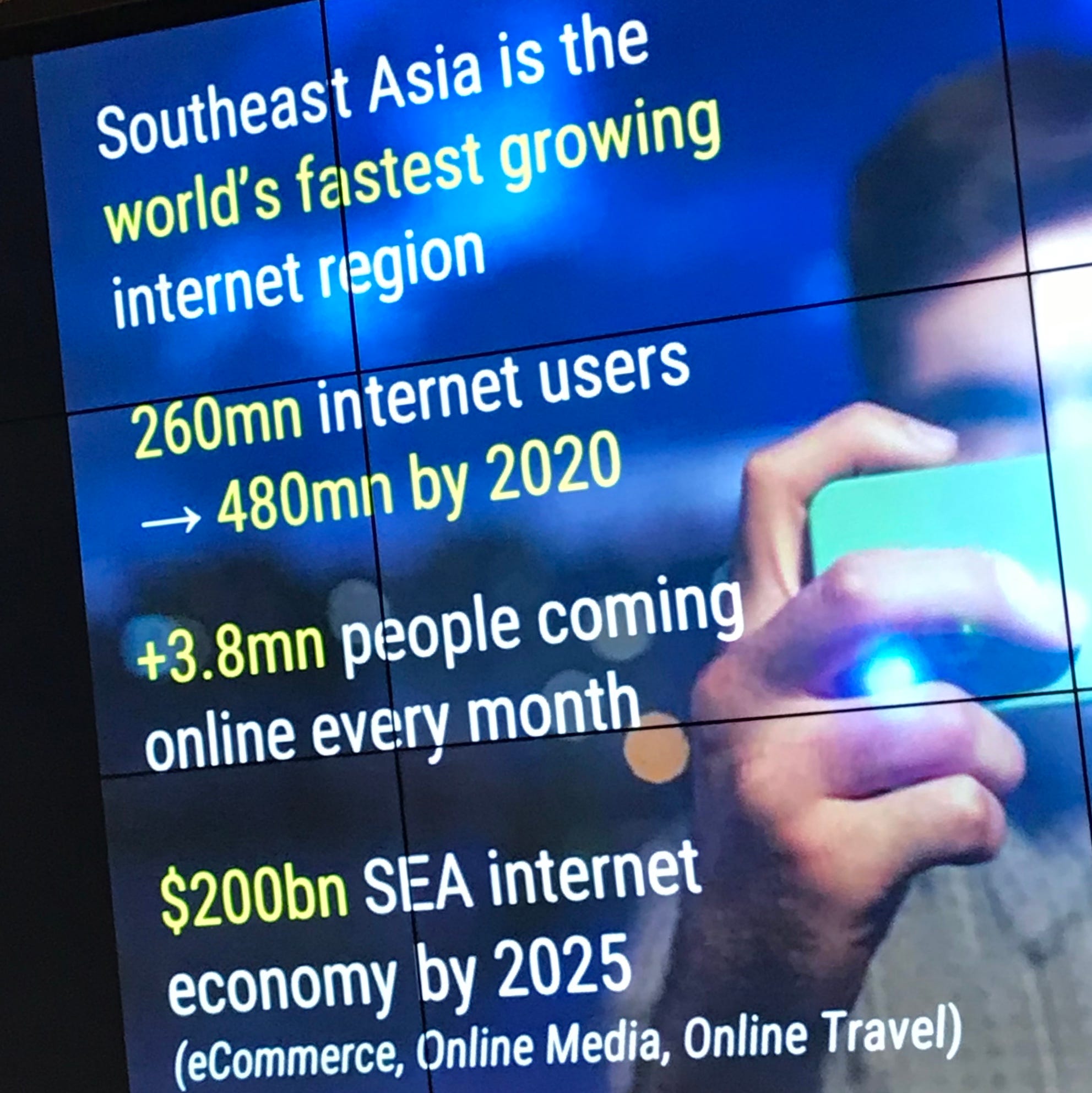
One of the slides from the digital marketing presentation
It’s been eye-opening having the opportunity to attend a variety of events in the fields of education, technology, and marketing. It’s one thing to learn by reading, but another to learn by diving into the field and interacting with seasoned professionals. It’s been 3.5 months since I’ve landed in Singapore and I’m learning something new everyday.