

Observations from Working with Early Childhood Classrooms in the U.S. and Singapore
“Coding is the new literacy.”
This is a phrase I heard many times back at university from a professor and mentor, Dr. Marina Umaschi Bers, who dedicated herself to researching and advocating computer science instruction in early childhood education. I agree with her statement: it makes sense that exposure to computer science trains students in computational thinking and expands their problem-solving skills. These are skills that can be applied to any other field. Additionally, in a world where our lives are increasingly entwined with digital technologies, shouldn’t we have some basic understanding of the underpinnings and algorithms behind the applications we use daily?
While coding may be the new literacy, I grew up in the tail end of a generation where this maxim didn’t exist. I was a student who had only gotten my first exposure to computer science during my university career. In middle and high school, I had taken computer classes that taught me how to type, and how computers work on a basic level, but I was never required to take a programming class. It’s amusing to think about how kids today formally learn programming logic at a younger age than I was when I learned to properly type!
Back at university, I took a class called “Tech Tools for Learning” with Dr. Bers. The class was very much rooted in experiential learning, and so we went into a couple of schools to deliver programming lessons to kindergarteners and first-graders with a screen-free programmable robot known as KIBO. Initially, I was unsure of how young kids would grasp concepts like sequencing and conditionals. But sure enough, after some tries, they got it. At the time, I remember thinking about how important it would be to bring these sorts of curriculums to many more early childhood classrooms in the U.S.
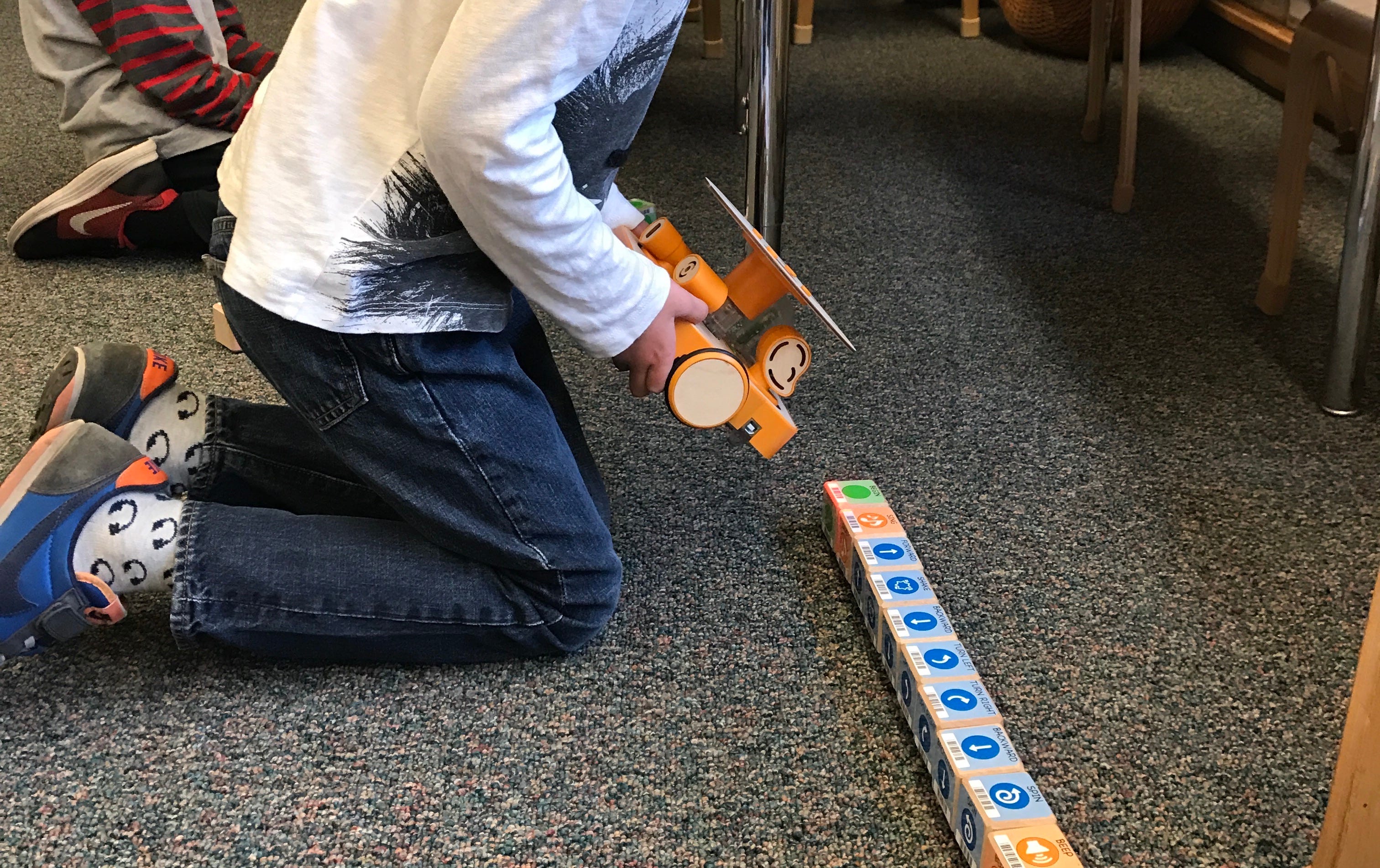
A student programming KIBO by scanning (literal) code blocks
Working at Tinkertanker, I’ve witnessed how the company has actually helped to bring computational thinking and programming curriculums to kindergartens throughout Singapore, as part of a government “Smart Nation” initiative called PlayMaker:
The IMDA PlayMaker Programme will be introducing a suite of child-friendly, technology-enabled toys that promote tactile and more kinaesthetic experience to 160 pilot preschool centres. These toys help children to explore and find creative solutions. Guided by adults, children will acquire abilities like logical thinking, reasoning, sequencing, estimation and inventive thinking. The toys also encourage children to work in small groups. Through collaboration, they develop social and communication skills.
It’s incredible to see computer science programs for young kids distributed on the scale of an entire country, when my previous experience had been working with two schools in Massachusetts. While I’m under the impression that computer science initiatives are being integrated into many more schools throughout the U.S. in recent years, I think there are still barriers which are preventing a nationwide integration of computer science curriculum into schools. For one thing, as a country with an education system fractured by zip codes, limited resources can restrict the energies that school districts can put towards investing in new teaching tools to deliver programming curriculums. It’s also important to note that Singapore is a much smaller country than the U.S.; achieving a widespread educational framework and curriculum update takes more time in the U.S.
As with any school subject, having dedicated teachers and mentors who are interested in and knowledgeable about the field is important to students’ success in computer science. Many early childhood educators don’t have experience with programming, as when they were students, coding wasn’t seen as the new literacy. While it’s important to teach computational thinking and programming concepts to students, it’s just as important that teachers are equipped with this knowledge as well — whether it’s for passing down this knowledge directly to students or for peripheral knowledge to integrate computational thinking aspects into projects for other subjects. In crafting computer science curriculums for students, both in the U.S. and in Singapore, it’s critical that thorough teacher trainings are also factored into them. And I’m not talking about a single session computer science boot camp for teachers to get up to speed so that they can then teach their students these concepts. Teachers need to truly be equipped with the information and tools to set their students up for success. If educators are uncomfortable with the materials they are teaching, how can young students gain a firm grasp on the material as well?
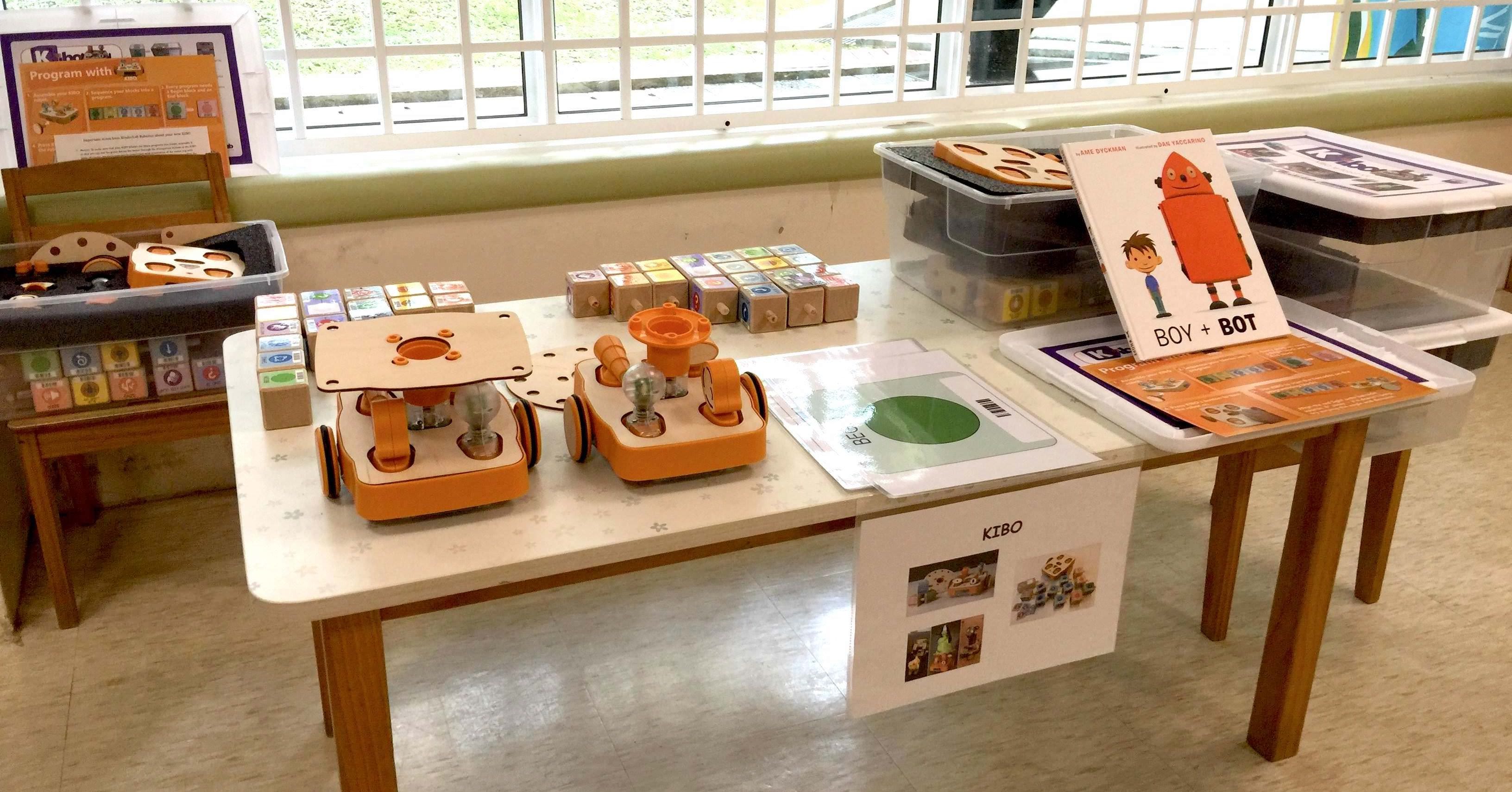
KIBOs set up at a preschool
There is a great opportunity in this space for educational firms like Tinkertanker to create and deliver curriculums to teachers who don’t have experience with computer science or teaching these concepts to children. In Singapore, I’ve had the chance to directly work with one preschool classroom using KIBO. The teacher was enthusiastic about getting the students to use the robots, but she also seemed a bit uncomfortable with the core programming concepts herself. While schools may have the effective teaching tools for giving students exposure to computer science, there now needs to be an improvement in, and emphasis on, teacher trainings. Let’s empower teachers so that we can empower students to be technologically engaged citizens.