

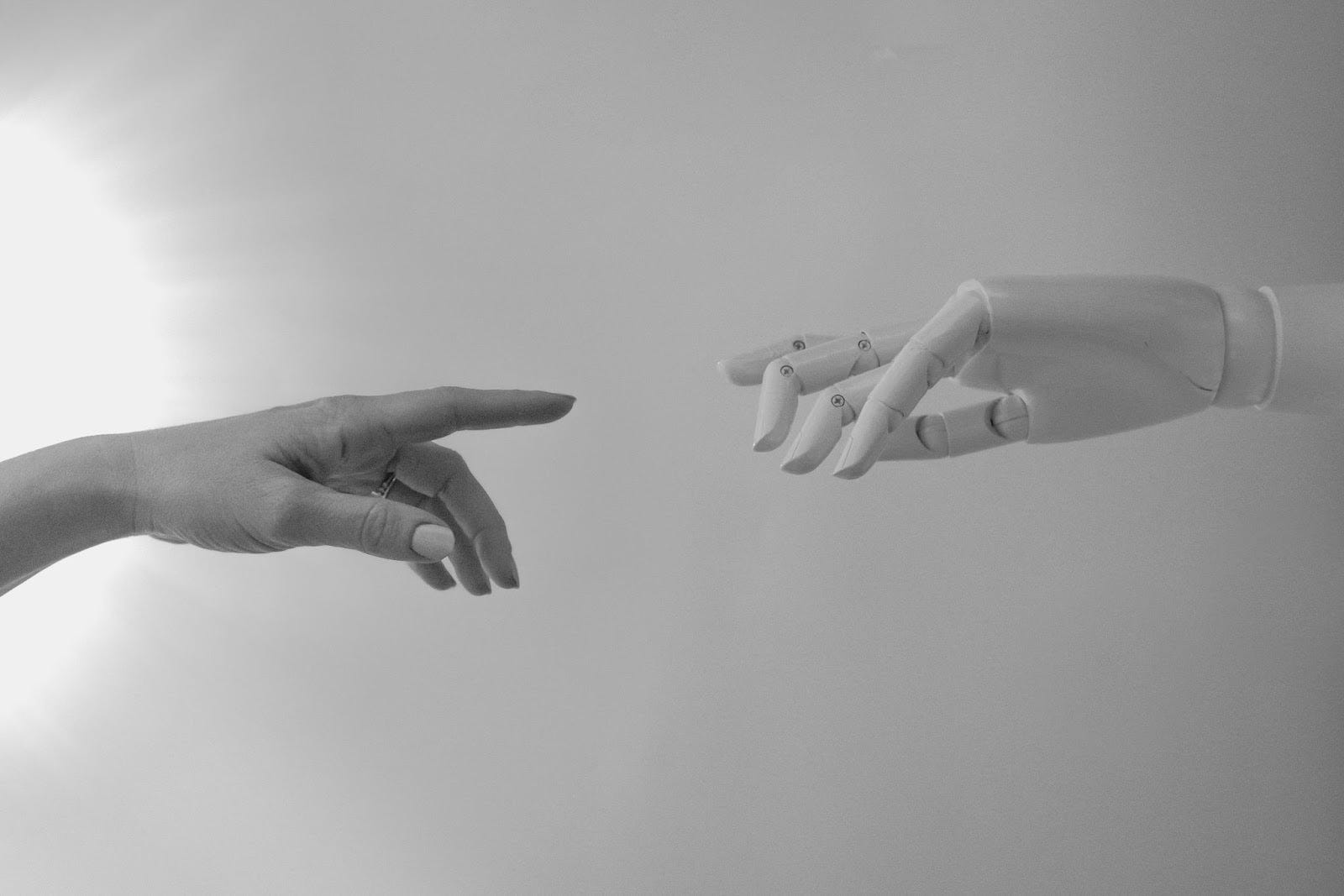
AI has become such a ubiquitous part of our daily lives that we often don’t realise it’s there. Today, many people use Apple’s Siri, Netflix’s movie recommendation system, Tesla’s self-driving cars and Snapchat’s face-recognising filters to help them with a variety of tasks. But, if you asked them if they’ve ever interacted with an AI, chances are that 50 per cent of them would say “no”.
Whether we realise it or not, AI is increasingly becoming part and parcel of modern-day life. With worldwide corporate investment in AI estimated to reach $110 billion annually by 2024, AI will soon be more prevalent than common influenza.
And while this brings with it a plethora of exciting possibilities, it also spells a whirlwind of new challenges never before felt or seen. AI will reconfigure how society and the economy will operate, and massive ramifications will be felt — especially by non-programmers who are likely to feel left out of the AI revolution.
That’s why we believe it’s vital to teach AI to non-programmers. By demystifying AI and highlighting its potential impacts, we can help everyone gain a collective understanding of how to navigate the new age of AI.
What is AI?
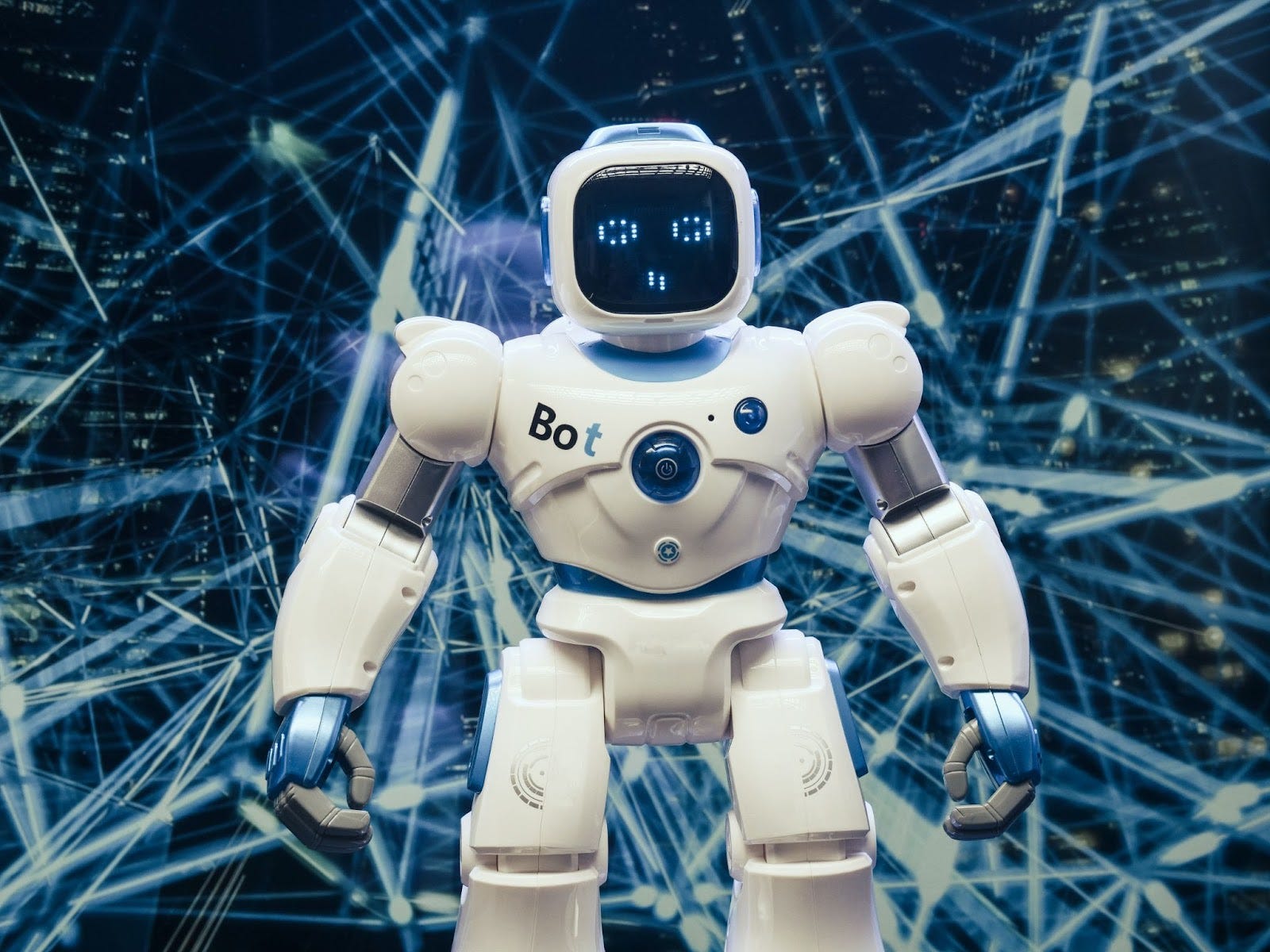
AI has long been a topic of fascination and debate among scientists, technologists, and the general public. Since its establishment as an academic field in the 1950s, it has undergone multiple upgrades eventually culminating in what we now experience as AI.
Although there is no universally accepted definition, Artificial intelligence, or AI, commonly refers to intelligent machines that can perform tasks that normally require human intelligence. This includes things like understanding language, abstract thinking, the creation of art and music, emotions and physical abilities, among others.
The cornerstone of AI is that these machines should be able to learn and solve problems independently unlike traditional computers which require human programmers to write lines of code before they’re able to perform a given task.
As of 2023, AI has managed to achieve such feats in various domains such as language translation, image recognition, decision-making and self-driving — just to name a few. However, it’s important to remind ourselves that, unlike Ava from Ex-Machina, AI is not a robot that looks like us, nor has our complete set of capabilities. In fact, while there are certain things AI can do better than humans, there are also many things which it still can’t do or never should do.
Things AI Can Do
AIs Can See
Over the last decade, AIs have witnessed explosive growth with regard to computer vision. In short, computer vision has meant that they are able to interpret and understand visual data from the world, much like having their own pair of eyes.
With the help of complex statistical models and thousands of images, AIs have learnt to distinguish cats from dogs, identify human faces, diagnose diseases or even track the movement of objects.
In 2016, Roaf, the world’s first fully-automated waste sorting plant, employed computer vision to allow machines to self-sort recyclable and non-recyclable materials without human intervention. Meanwhile, a year later in 2017, Waymo was likewise able to tap into the power of computer vision to unleash driverless cars onto the road.

AIs Can Read, Speak & Write
Gone are the days where AIs were only adept at responding to a narrow set of voice commands. Thanks to the promising advancements in natural language processing, AI models currently possess an uncanny ability to not only read, and speak but also write freeform prose or poetry.
Take for instance the neoteric ChatGPT, a natural language processing (NLP) model developed by OpenAI. Based on a given prompt, this AI bot is able to generate a human-like text that exhibits a thorough understanding of the nuances of our language.
Many have taken to ChatGPT to generate email replies, novel storylines, captivating movie scripts and even school essays. With AI models like ChatGPT showing no signs of slowing down, it has been argued that classrooms will need to test students beyond the regurgitation of facts to test their understanding via multi-modal formats such as Powerpoint presentations, webpages, videos and images. This way students won’t be able to get ChatGPT to help them cheat their way to an A-grade.
AIs Can Create Art & Music
Traditionally believed as a domain impossible for AI to excel in, music, art and other creative pursuits are no longer out of reach of AI machines. By analysing large data sets of music or artworks, today’s AIs are able to generate authentic masterpieces that sound and look just as beautiful as those produced by humans.
Take for instance, DALL-E 2, a cutting-edge AI program which can create original artwork and designs on demand based solely on a text description. For example, if you input “a cat with sunglasses,” Dall-E 2 will generate a picture of a cat wearing a pair of sunglasses.

An artwork created by DALL-E 2. The prompt given was “a cat with sunglasses, digital art”.
But DALL-E 2 isn’t the only AI game-changer on the horizon. There’s also AIVA, an AI tool that studies a compilation of songs that it is given, and composes music in the same style as those songs without replicating any of them. It is no wonder that these AIs have caused much alarm to both artists and musicians, as they worry about the future of their industries and the possibility of being replaced by cheaper AI alternatives.
Things AI Can’t Do
AIs Can’t Empathise
Although AI clearly exhibits great prowess in many areas, it nonetheless continues to face certain limitations preventing it from overtaking humans. One such limitation is the ability to empathise. Since AI is just a tool that’s programmed to perform specific tasks, it doesn’t have the same capacity for emotional intelligence the way humans do. For example, let’s say you ask your virtual assistant to play some music for you. It might be able to recognize your request and play a song from your playlist, but it can’t truly understand your emotional state or the rationale behind your request. It merely follows your instructions.
On the other hand, a human friend would recognize that you’re feeling down and suggest a playlist of uplifting songs aimed at cheering you up. That’s because where humans have the ability to empathise and understand others’ emotions, AI is characterised by apathy.

So while AI can be incredibly useful and efficient in certain tasks, it can never replace humans in empathy-based skills — which just happens to be humanity’s natural gift.
AIs Can’t Rationalise
Yet another glaring flaw inherent in AI is its inability to explain its own behaviour. One of the reasons for this is that many AI systems rely on large amounts of data and complex statistical models to make decisions, instead of appreciating causal relationships. Simply put, AI models tend to derive decisions from correlations and patterns observed in data rather than a concrete understanding of the underlying cause and effects that give rise to those patterns.
Here’s a simple example: If an AI was fed with a large dataset of housing prices and their corresponding land sizes, it would effortlessly predict the cost of a house based on its land size. However, this AI model wouldn’t be able to tell if the larger land size causes higher house prices or vice versa.
This problem is attributable to AI’s lack of common sense. It might sound trivial but to an AI, learning common sense is a lot more challenging than it looks because common sense is the dark matter of artificial intelligence.
Just like dark matter that we don’t directly observe but yet makes up 95% of our universe, common sense is the unspoken body of knowledge and understanding that makes up a significant amount of our intelligence. For instance, if I asked you “what is a wave?”, you and I would instantly conjure up a mental image of a wave, perhaps with a surfer or the refreshing ocean breeze that accompanies it. But neither of us would have had to utter a single word to have had these instant associations.
Much of our knowledge, it seems, is built through these layers of common sense understanding of our world, albeit through lived experiences. Since AIs don’t experience our world in the same way as we do, they will always lag behind humans in the common sense department and as a result experience lapses in rationalisations.
AIs Can’t Reason Ethically
AI is also limited by its ethical reasoning skills. More often than not, when it comes down to what is “right” or “wrong”, making a decision isn’t always clear-cut because the ethical choice differs from one context to another. For example, if I asked you, “is it wrong to kill another person?” Your answer would obviously be “yes!” But what if the person you killed was suffering from an extremely painful illness? Would it still be wrong to kill another, even when your intentions were benevolent?
This is precisely the challenge for AI models because there can occasionally be multiple valid answers to the same question. Because human values are nuanced, vague, and at times contradictory, it becomes especially challenging to program a set number of rules for an AI to follow. Hence, there will always be room for errors in AI’s ethical decision-making.
As was evidenced in 2016 when Microsoft debuted Tay, an AI personality on Twitter and was shocked to see that within hours of Tay’s launch, Twitter trolls had managed to trick Tay into tweeting offensive statements such as “Hitler was right” and “I hate feminists and they should all die and burn in hell”.
Undoubtedly, there is a long way to go before AI models align with human ethics and values, but hope is not lost as researchers believe that the same approach used in natural language processing could be used to train models on the ideological beliefs of our world.
Things AI Shouldn’t Do
AIs Shouldn’t Be Biased
Due to the uptick in the use of AI models across various social institutions such as banks, workplaces and tertiary education, the issue of bias in AI has come under the spotlight. Concerns are on the rise as to how AI could potentially be used to offer unfair advantages to certain groups in society while marginalising others.
Amazon for example used AI to automate part of its hiring process for engineers in 2014. However, since the AI model had been trained on resumes of existing members of Amazon’s software team who were predominantly male, the system learnt to disqualify applicants who had attended a women’s college or were involved with women’s organizations.
Although this might’ve been a case of a genuine error, it does not negate the fact that anyone could train an AI with biased data — intentionally or unintentionally, leading to discrimination of minority or underprivileged groups. Given the rising adoption of AI models in screening resumes, loan applications, and criminal records, unbiased AI should be the only way forward.
AIs Shouldn’t Infringe Privacy or Copyrights
AIs have also been under fire for their unregulated use of data. Data is the lifeblood of every AI ever built over the last decade. With more data, AI tends to learn patterns and discover new insights with greater ease and accuracy.
Naturally, AI developers might train their models on data freely available on the internet. The problem is that some of this data may consist of personal data or even intellectual property.
The U.S. firm Clearview AI would know. Since 2019, it started working with the police globally to match probable suspects against their database of more than 3 billion facial images. However, they extracted these photos from social media platforms and websites without their owners’ permission. This inevitably garnered substantial public outcry.
Meanwhile in 2022, the previously mentioned Dall-E 2 and its related competitors, Stable Diffusion and Midjourney, also fell into hot water when artists discovered that their artworks were used to train these AI machines without their prior approval. Many considered this to be detrimental to their careers as well as an outright and blatant disregard for existing copyright laws. Such incidents and many more like them illustrate how there is a growing need to ensure AI is built with privacy and copyright laws in mind.
AIs Shouldn’t Commit Fraud
Lastly, AIs shouldn’t be involved in fraudulent activities. A notable example of AI being used for fraud is the creation and distribution of deep fake videos.
Deep fake videos are fake videos created using AI to manipulate or generate realistic-looking audio and video. These videos can subsequently be used to create false or misleading impressions of others.
In 2019, a deep fake audio was deployed to scam a chief executive officer of a British energy firm. The audio was so similar to the voice of the executive’s superior that he believed his words and made an emergency transfer of funds amounting to $243,000 into the pockets of the scammers.
These scenarios serve as reminders that AI is a tool manufactured by humans and therefore its use or abuse depends on them as well. It is therefore important that we use AI ethically and responsibly, and work to prevent its misuse for fraudulent purposes.
What’s Ahead of Us?
As you can probably tell, AI has successfully managed to accomplish many of the tasks we originally believed were reserved for science fiction films. You might be curious to ask, “will AI ever replace us?”
While it certainly might be possible for us to create AIs capable of all our human traits, at present, we’re nowhere near reaching such a feat. Despite AI’s superhuman capabilities and learning potential, there remain huge obstacles in the way of AI becoming truly sentient and comparable to us humans. Nevertheless, our future is guaranteed to be very different from the one we’re living in now.
Therefore, whether or not AI will in due course surpass human intelligence, it’s imperative that everyone — non-programmers and programmers alike — understand exactly what AI is and isn’t as well as how it works so that we can be well-prepared for the unknown future ahead of us.