

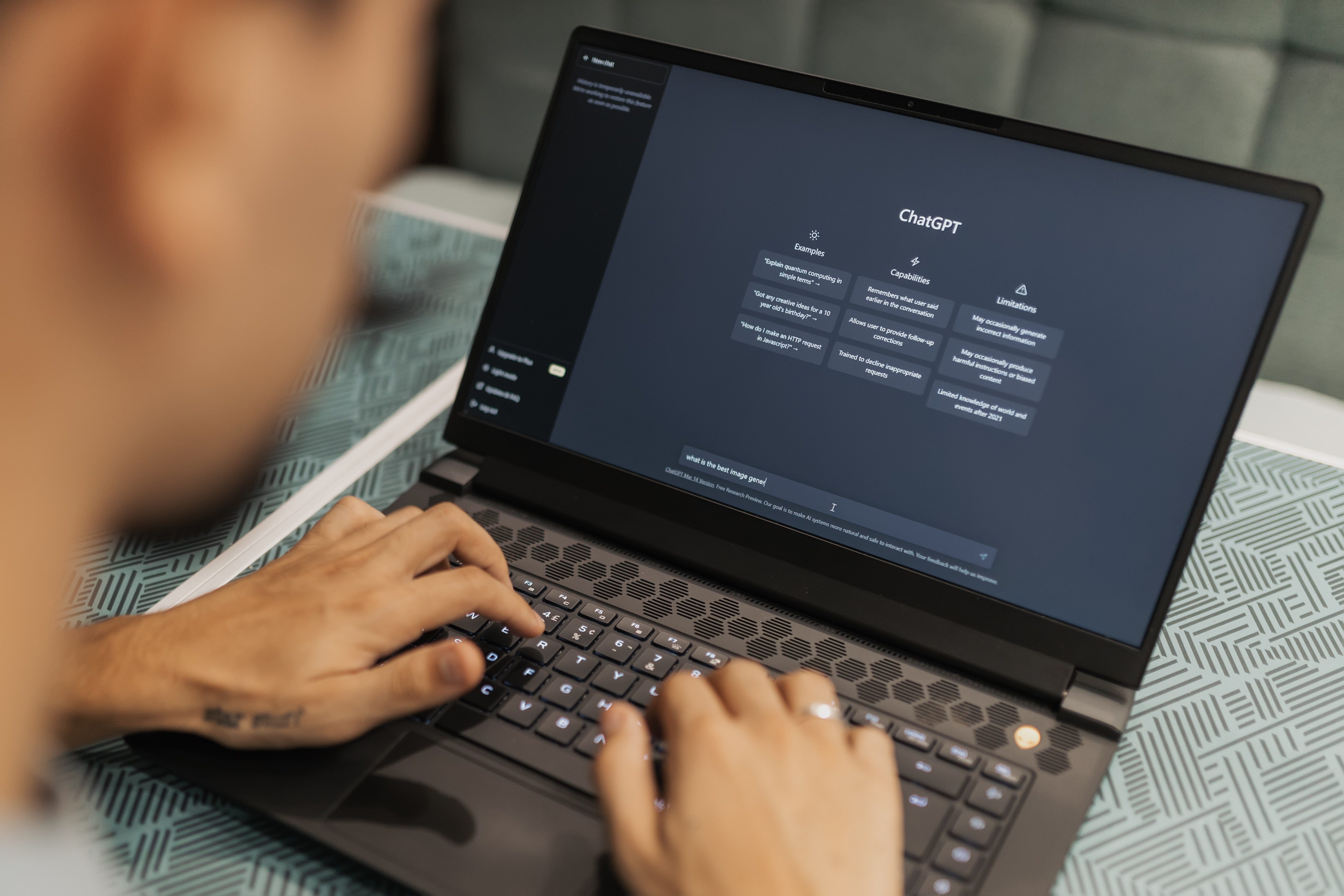
With more than 1 billion users worldwide, ChatGPT has sparked much debate about issues like academic fraud, plagiarism, and the validity of assessments. The increasing scale at which students are using ChatGPT to complete assignments has left educators wondering about its potential impact on their students’ learning.
A prevalent reaction has inevitably been to prohibit the use of this powerful tool in educational settings through the help of AI detectors. However, there remains a paradoxical view that perhaps instead of discouraging ChatGPT, educators should instead encourage students to utilise it.
As coding educators, we initially had mixed feelings. Could ChatGPT really help learners reinforce and deepen their knowledge? Or would it instead reduce their creative and critical thinking abilities?
After tinkering with the tool a bit more in the classroom, we are in the camp that ChatGPT has a well-deserved place in our classrooms. And unsurprisingly, we are not alone. We have seen polytechnic and university lecturers explicitly allowing the use of ChatGPT in attempting their programming assignments. It is a tool suited for learners of all ages and backgrounds, that is guaranteed to bridge learning gaps and foster stronger conceptual understanding.
ChatGPT as a Learning Resource
One of the most fundamental ways that we’ve found ChatGPT useful in classrooms is by providing personalised and instant feedback to students, facilitating their learning and growth. Traditionally, coders would need to search Google, Stack Overflow, or the respective online documentation whenever they were unsure about syntax or were stuck on a coding problem. This is no longer necessary as students can get immediate explanations of any programming concept from ChatGPT. “It kind of speeds things up,” shared Grady Booch, the chief scientist for software engineering at IBM. “It’s not revolutionary. It’s evolutionary.”
Take for instance a coder who just learnt about conditional if-else statements. If he is still unsure of this concept, he could ask ChatGPT to provide a sample code to illustrate this concept. He could also ask specific questions like “Where do I place the curly braces?” or “How do I handle logical operators?” This enables beginner learners to delve deeper into concepts on their own that they might otherwise feel intimidated to ask out loud.
Admittedly, based on observations in our classrooms, we have discovered that ChatGPT facilitates accelerated learning. As students engage with ChatGPT, they improve their understanding of fundamental concepts, avoid common mistakes, and pose more insightful questions, thereby enabling deeper and holistic exploration of class content and syllabus.
ChatGPT as a Debugging Machine
Another fascinating aspect of ChatGPT is its ease of debugging errors. No matter how advanced a coder might be, the issue of errors affects us all. Debugging these errors can often feel tedious or time-consuming. However, with ChatGPT, learners can now copy and paste error messages and quickly identify their mistakes without too much of a hassle. We’ve seen students use ChatGPT to help debug their code and also to ask for help whenever they are stuck at a particular step in the coding process.
ChatGPT as a Companion Developer
Prior to ChatGPT, if anyone had suggested that a machine would be able to write code and program software, it would have been met with scepticism and disbelief. Yet, today YouTube and TikTok are rife with videos of people showing how they’ve used ChatGPT to perform tasks ranging from building full-fledged websites to scraping data from the internet. Programs which used to require a hefty amount of coding, are now being produced instantaneously by ChatGPT.
“Generative AI can automatically generate code, making it easier to create software, and amplifying the power of a software engineer,” wrote Hadi Partovi, CEO of the tech education nonprofit Code.org in a Tweet. Indeed, many of our proficient students who understand the structure of code have been able to apply boilerplate code and use ChatGPT to generate snippets for their software projects. While formal educational institutes might condemn such behaviour, we don’t mind it as long as our students are able to get their code to work!
Nonetheless, our students are always encouraged to err on the side of caution. We have had an incident in the past where one of our pupils relied too heavily on ChatGPT to generate code for his programming assignment on Promises in Javascript, by skillfully plugging in inputs of previous code snippets into outputs of other code snippets. Though he got past the simple questions easily, he was finally stumped by a difficult question that required a solid understanding of the concept. By taking shortcuts in his learning process in the earlier questions, he missed out on the core purpose of the assignment: to understand the concept of Javascript Promises. As with all tools, ChatGPT can be misused to the detriment of learners. However, just as we allow scissors in classrooms despite the harm they may cause, we likewise should permit the use of ChatGPT in class, keeping in mind that it shouldn’t be used to cause more harm than good.
ChatGPT as a Personalised Learning Platform
Given that we’re still only scratching the surface of ChatGPT’s vast capabilities, there is room for more growth. With a little bit of imagination, it’s easy to envision a near future where ChatGPT would not only be able to analyse a student’s coding history and performance but will also be able to identify areas where the student needs more practice or support and suggest relevant coding exercises or resources. Although ChatGPT would never be able to replace educators completely, its presence would certainly help enhance individuals’ access to quality learning experiences.
We are already seeing the first wave of edtech companies leverage on ChatGPT, including Khan Academy that is trialling Khanmigo, an AI-powered guide.
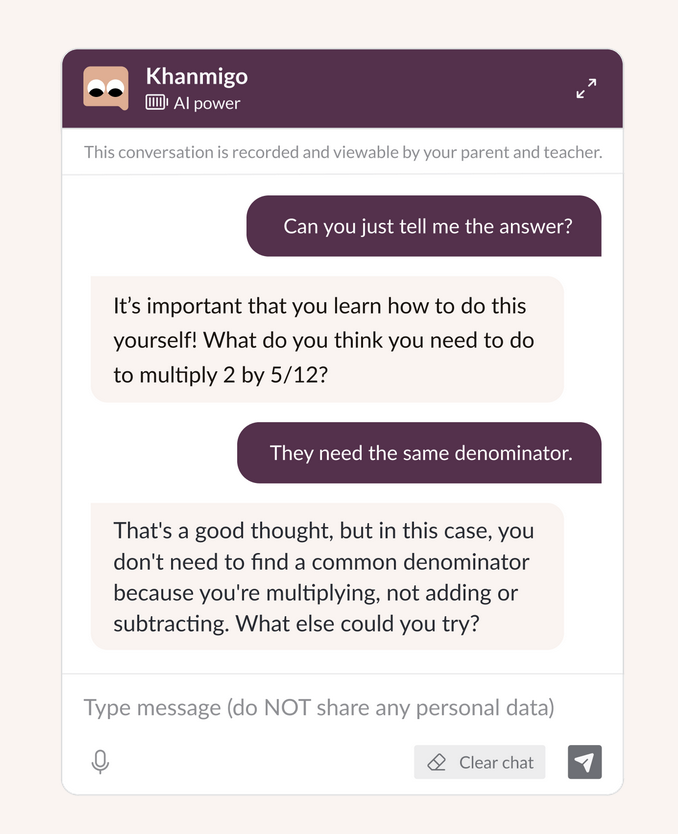
screenshot taken from https://www.khanacademy.org/khan-labs
We love seeing that in a screenshot demonstration of their chatbot (see above), they are highlighting that their bot is trained to guide the student to maximise their learning, and not to just provide answers to them. We are excited to see what innovative services are in store for us that will be built on top of ChatGPT.