

In a rapidly evolving world, where technology interacts with almost anything and everything we can think of, it wouldn’t be hard to believe that fashion and textiles will soon get their own digital makeover too.
Although the invention of the sewing machine in the 1800s radically revolutionised the textile manufacturing industry, the capabilities of sewing machines have remained rather stagnant for decades, requiring manual manoeuvres and a dedicated operator to perform sewing tasks.
For a while, it seemed the innovation in the industry had come to a standstill. However, technology is ever-changing, and evolving. Technology and embroidery might seem like disparate realms, but they share several fundamental principles. Both require precision, attention to detail, and a systematic approach. Sewing enthusiasts meticulously stitch fabrics together to bring their visions to life, while technology aficionados weave lines of code to create digital masterpieces. Bernina, a renowned name in the sewing industry, recognized these parallels and set out to bridge the gap between these two domains, empowering individuals to explore the synergy between them.
The result — Bernina’s cutting-edge sewing technology.
Long revered for its exceptional craftsmanship and precision, Bernina recently took its embroidery machines to new heights by incorporating ground-breaking technology. Their machines now come equipped with user-friendly interfaces, integrated sensors, and even WiFi capabilities. These advancements not only enhance the sewing experience but also create a seamless environment for integrating coding into the process.
HAND-DRAWN EMBROIDERY
One of the fascinating innovations introduced by Bernina is the concept of hand-drawn embroidery. With the integration of state-of-the-art technology, Bernina has introduced “Bianco,” a revolutionary drawing app that seamlessly translates users’ hand-written notes and drawings into personalized machine-embroidered artworks. This neoteric feature enables users to effortlessly transform their unique creations into stunning embroidery designs ready to be stitched automatically onto fabric using a Bernina embroidery machine.
The process starts by creating a design using the Bianco app’s intuitive interface, where users can select from various drawing tools, colours, and brush sizes to bring their artistic visions to life. Whether it’s a hand-drawn illustration, calligraphy, or even intricate patterns, the app captures every stroke with precision.
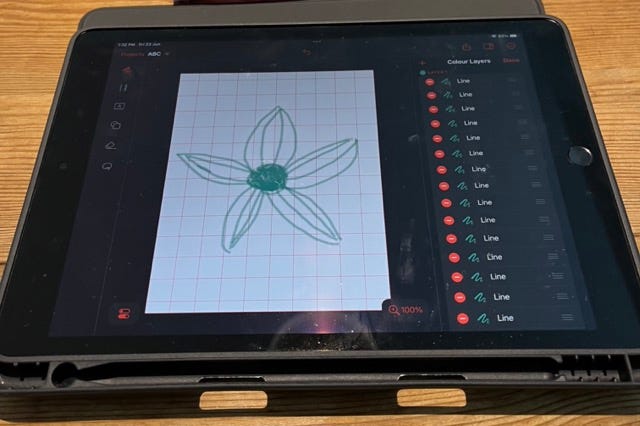
A hand-drawn flower created on the Bianco app.
Once the design is complete, the app seamlessly translates the final artwork into a stitch file compatible with Bernina embroidery machines. The file can be wirelessly transmitted to a compatible Bernina embroidery machine through WiFi or saved on a USB drive for direct transfer. Once loaded onto the machine, the automated stitching process takes over, meticulously recreating the hand-drawn design on fabric with precision and finesse. The result is a unique fusion of traditional artistry and modern technology — a masterpiece born from the intersection of sewing and technology.
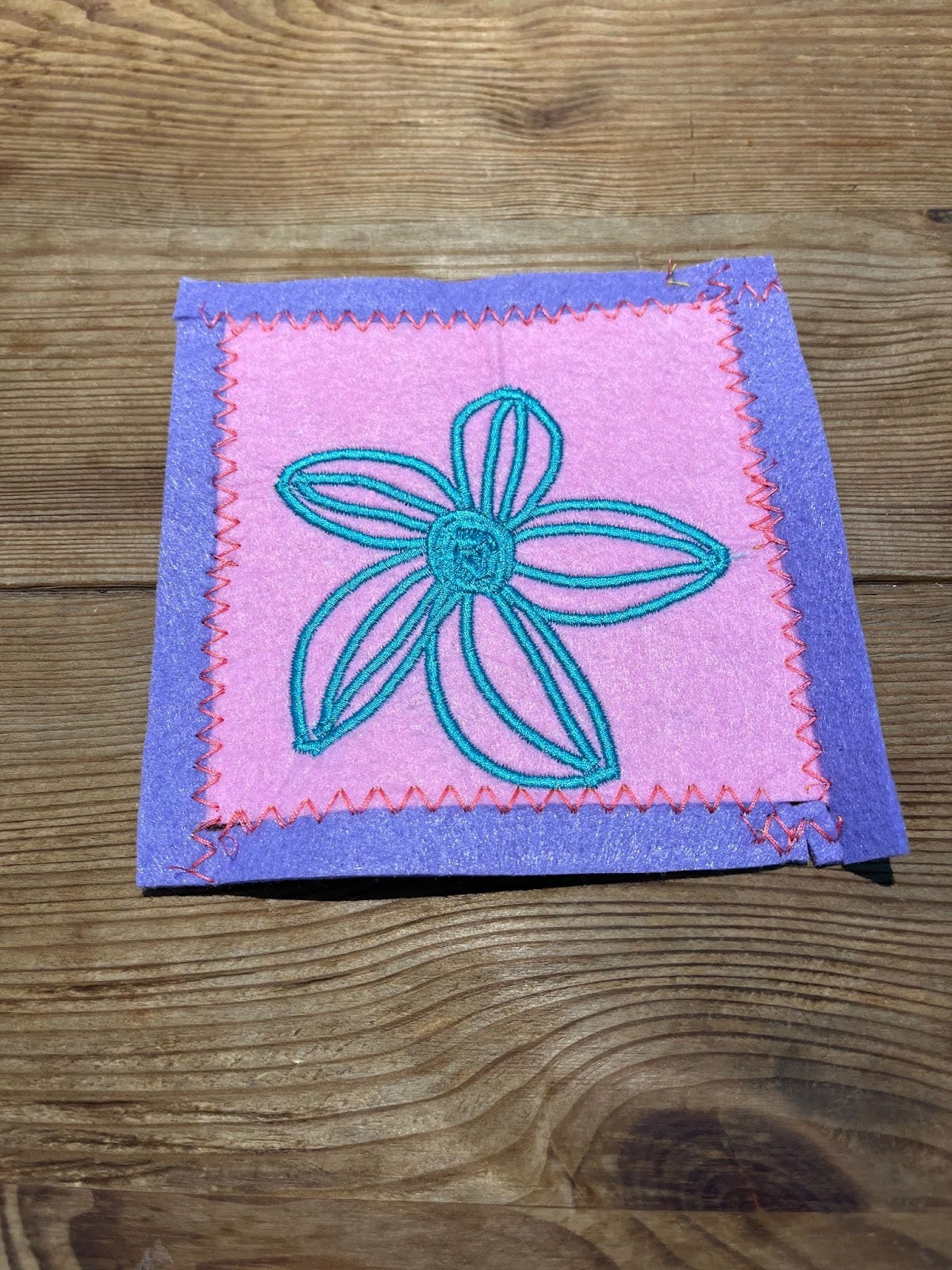
The final embroidered design!
SEWING WITH CODE
In addition to the innovative hand-drawn embroidery feature, Bernina has embraced the integration of coding into the sewing process, opening up a world of possibilities for creating intricate designs, patterns, and tessellations. By combining the precision of coding with the artistry of sewing, Bernina enables users to push beyond the boundaries of what can be achieved with embroidery machines.
To start, users navigate to the notable platform, Turtle Stitch (https://turtlestitch.org/run), a coding platform that allows users to style and customise their embroidery designs using block-based programming. With Turtle Stitch, users can unleash their coding skills to generate complex and intricate patterns that can be stitched onto fabric using a Bernina embroidery machine.
The block-based programming interface simplifies the coding process, making it accessible even to those who are new to coding. Users can select coding blocks that represent various stitching actions such as moving the needle, changing thread colour, or creating complex stitches. By arranging these blocks in a logical sequence, users can define the embroidery path, stitch types, and other parameters.
Turtle Stitch provides a visual representation of the design, allowing users to see how the code translates into the embroidery pattern. This visual feedback empowers users to iterate and refine their designs, ensuring the desired outcome before transferring the code to a compatible Bernina embroidery machine. Like before, once the design is finalised, the code can be downloaded as an EXP file and transferred over to the Bernina embroidery machines via USB.
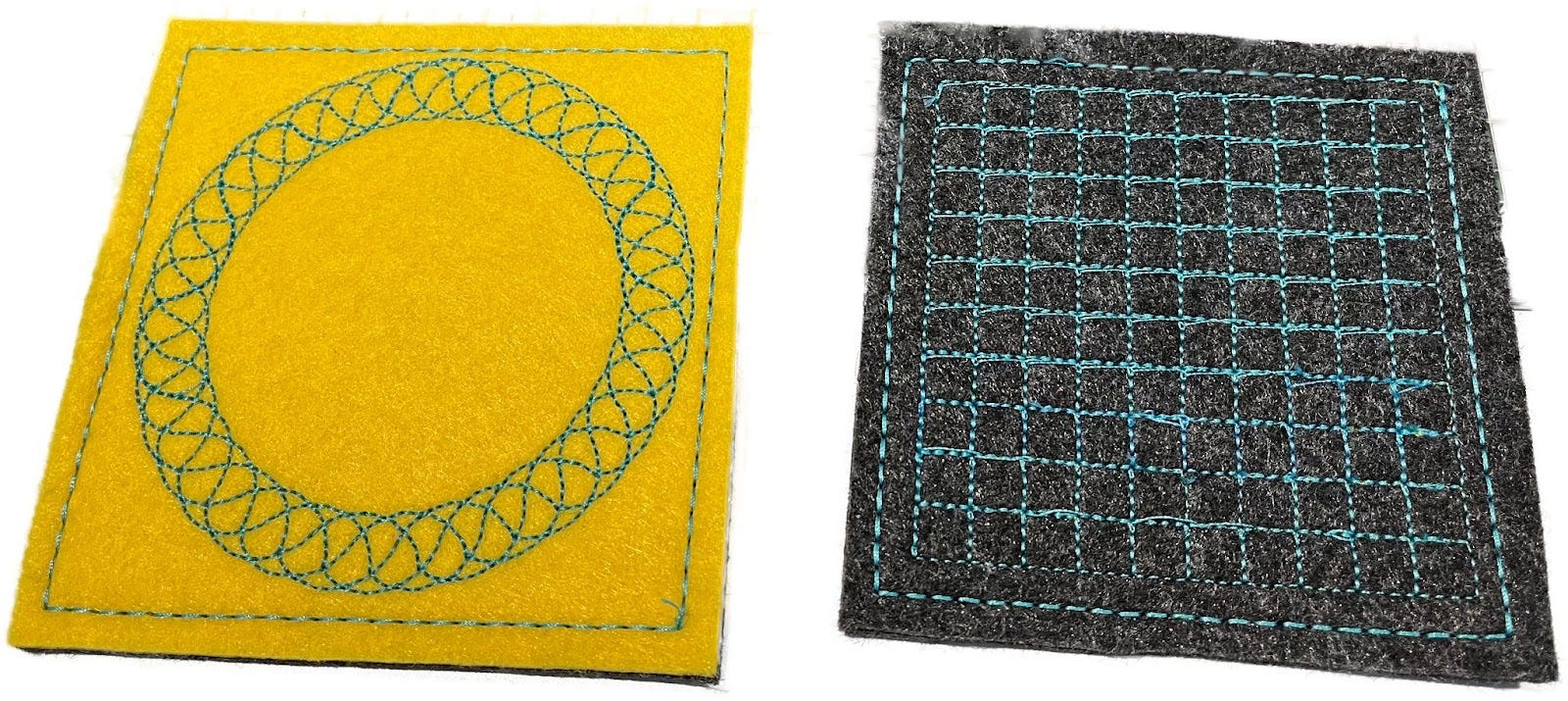
Embroidered textiles that were made using Turtle Stitch code.
ADDING WIRES, MICRO:BITS AND MORE
Bernina’s commitment to pushing the boundaries of sewing with technology goes beyond the realms of embroidery designs and coding. With their advanced embroidery machines, enthusiasts can take their projects to a whole new level by incorporating interactive and electricity-powered elements into textiles. By integrating conductive thread, micro:bits, resistors, and other hardware, users can create innovative and interactive textile inventions that unite technology and sewing in exciting ways.
Conductive thread serves as the foundation for such projects, allowing electricity to flow through the fabric and creating circuits within textiles. Bernina embroidery machines, with their precise stitching capabilities, can seamlessly incorporate conductive threads into the fabric, ensuring the electrical connections are secure and functional.
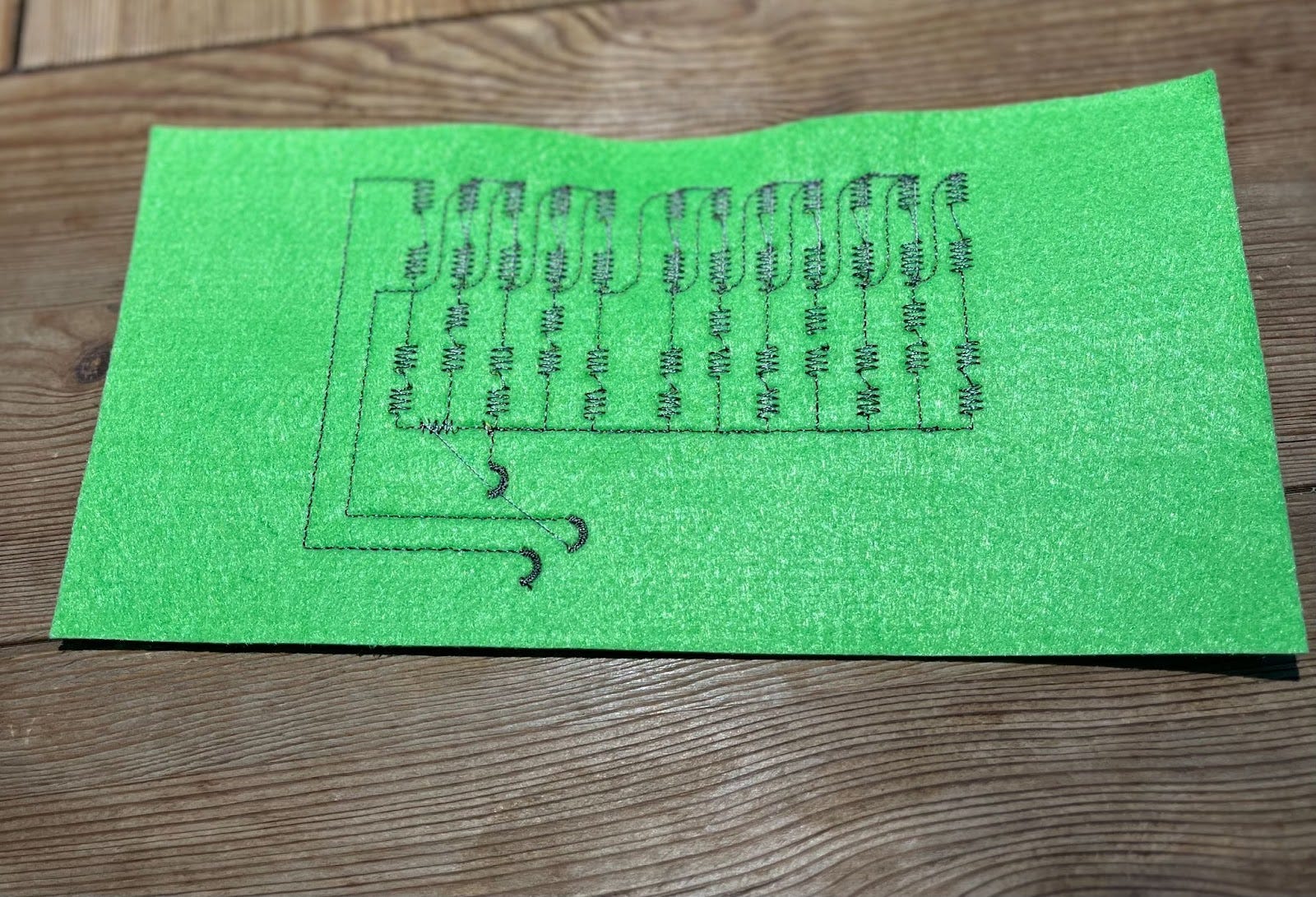
Conductive thread embroidered onto fabric to form a circuit.
Apart from conductive thread, micro:bits, small programmable devices, are also integral components in these projects. They can be programmed to control various elements of the textile invention, such as lighting up LEDs, producing sound, or triggering sensors. With their user-friendly interface and wide range of coding possibilities, micro:bits provide an accessible platform for beginners and experienced coders alike to bring their interactive textile ideas to life.
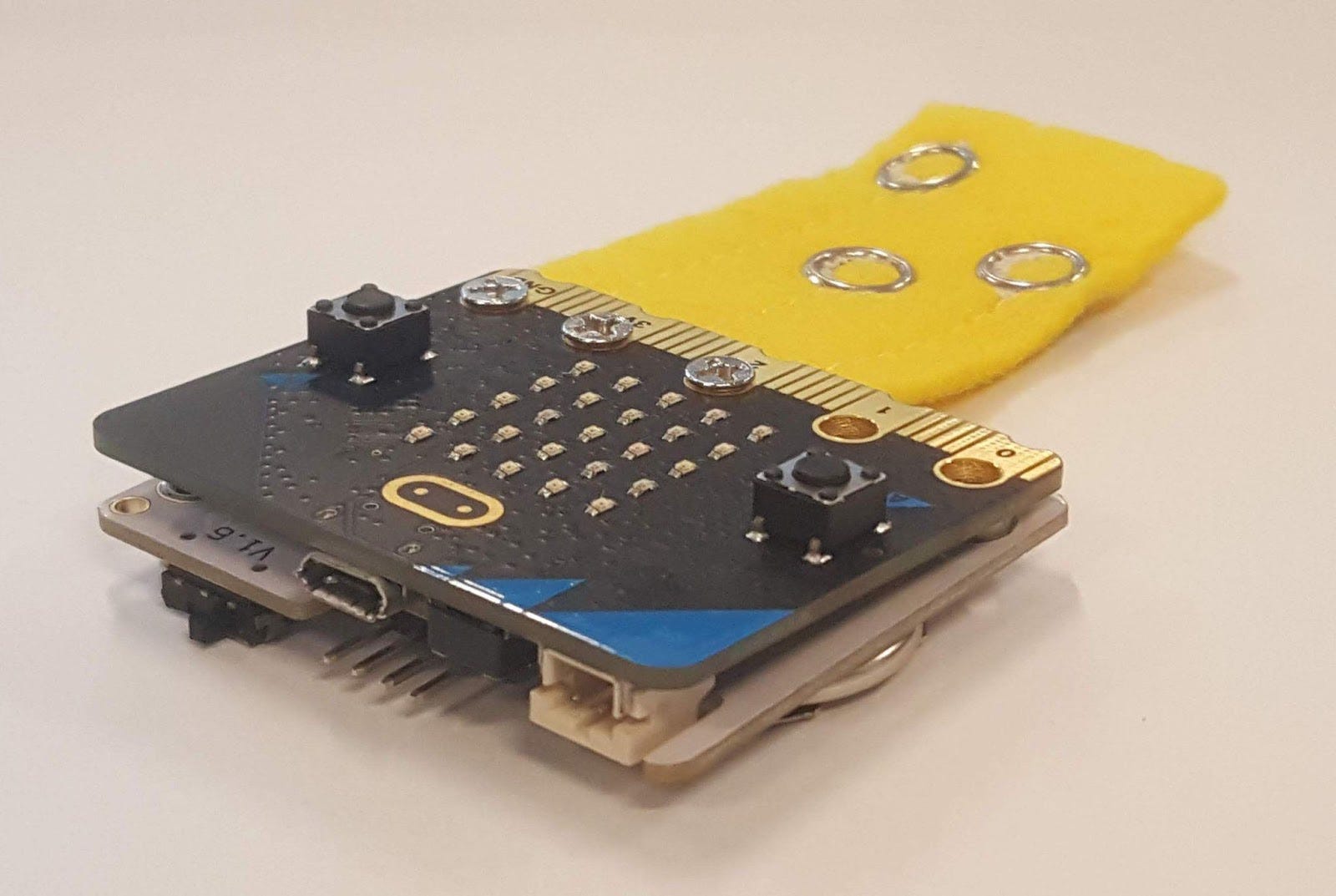
A micro:bit attached to a power:bit.
One interesting project that can be created by adding conductive wire, micro:bits, and more to textiles is the E-textile piano. Using the Bernina embroidery machines in combination with conductive thread and micro:bits, users can design a fabric-based piano that produces sounds when touched. The conductive thread acts as the circuit, connecting the micro:bits to pressure-sensitive piano keys.
While it is an advanced project, building the E-textile piano requires users to break things down into simple steps. First, they will begin by designing the electric circuit using Turtle Stitch and embroidering it onto a fabric. Next, the hardware will be added, such as resistors, and pressure-sensitive piano keys. Finally, the micro:bit will need to be coded to produce different sounds when each piano key is pressed.
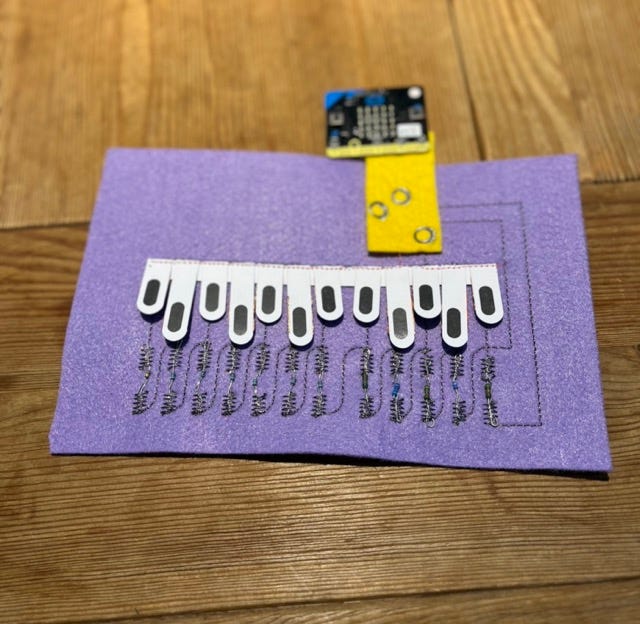
An E-textile piano made with a Bernina embroidery machine.
Bernina’s dedication to seamlessly combining sewing, technology, and coding has revolutionised the creative potential within the industry. With the introduction of the hand-drawn embroidery feature and the integration of platforms like Turtle Stitch and micro:bits, Bernina enables users to express their artistic visions with precision and finesse. The fusion of traditional craftsmanship with modern technology and coding unlocks limitless possibilities, from personalised designs to intricate patterns and creations. As Bernina continues to push the boundaries, the future of sewing with code holds the promise of even more awe-inspiring innovations in the world of embroidery and textile arts.
We have an insatiable curiosity for exploring cutting-edge maker platforms and discovering new opportunities, all while enthusiastically exchanging knowledge with like-minded individuals. If you resonate with our passions, don’t hesitate to reach out and connect with us at hello@tk.sg!