

Editor’s note: Zhi Yi, a former student of YJ’s, joined us for a 3.5-month internship—part of which was during our local “circuit breaker” lockdown. Zhi Yi came in with a wealth of Unity experience, and did a great job helping us revamp our curriculum in preparation for future classes, while also making good use of our machining tools for a separate maker project. He’s just started his first year at NTU, doing Environmental Science, and we look forward to seeing what amazing things he comes up with next!
The noisy clattering of mice and keyboards rang out through the silent room. Competing with that, was Mr Soon’s voice — desperately attempting to engage the attention of multiple restless teenage boys who unfortunately would rather contribute to the aforementioned clattering by surfing the web rather than pay attention to the lesson. Inevitably, the same boys would go on to be clueless while attempting their assignments, and desperately backtrack through the slides to make heads or tails of what to do — of course asking Mr Soon for help when they got lost.
Reality wasn’t as hopeless as that, but the irony of the situation always stuck to me when I recalled going through those Game Design in Unity lessons that Mr Soon conducted for us as part of the Computer Elective Programme, back in school, over half a decade ago. We voluntarily signed up for the programme, and the allure of being able to create/play games as part of school was definitely enticing to us — but when it came to lessons we still gave Mr Soon the struggle every teacher faces dealing with easily distractible teenagers.
Those lessons definitely piqued my interest in coding. I’d felt kind of inadequate at coding compared to some of the others in the programme, who seemed to take to it like fish to water. Watching them use Python to draw elaborate fractals for an assignment, or relentlessly optimise a piece of C++ to solve a maths problem, while I just marvelled at the efficiency of their thought process was… kind of demoralising. The projects I did in Unity definitely weren’t as well-structured or efficient as theirs, but somehow those didn’t feel so important anymore. I felt really passionate about being able to create games in Unity — to watch ideas steadily blossom into a full game as I worked on it was so rewarding.
When Mr Soon offered Yan Wei (another intern) and I an internship to work on the Unity curriculum, I knew that I wanted to do it. For the past 3 1/2 months, we’ve been working on a 24-hour and 80-hour version of the curriculum.
Unity Curriculum
Drawing inspiration from the old curriculum, we planned out a list of key features we wanted to teach, and a series of games we would get them to build showcasing these features. These are games I built as part of the curriculum.
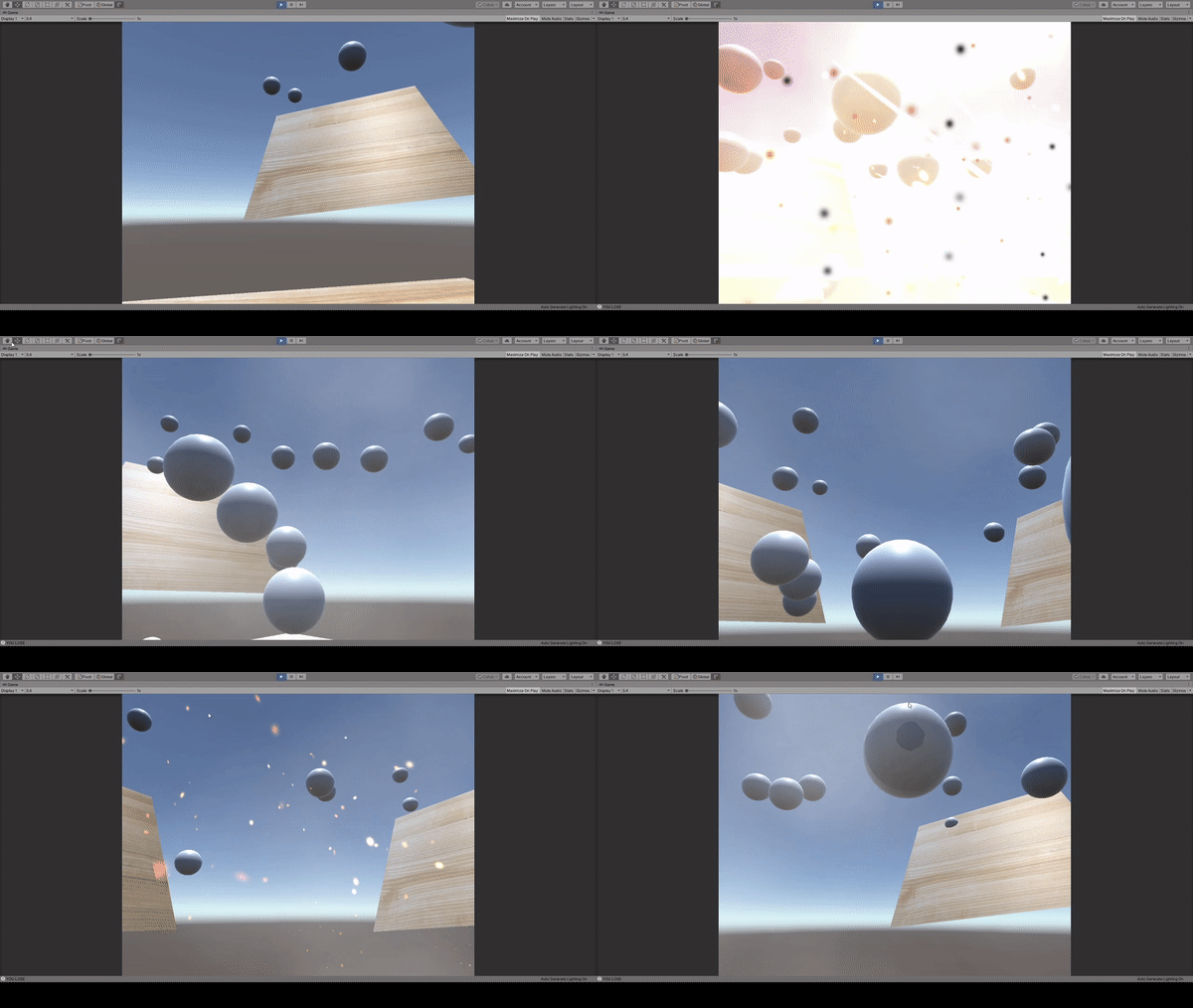
unity-dodgeball
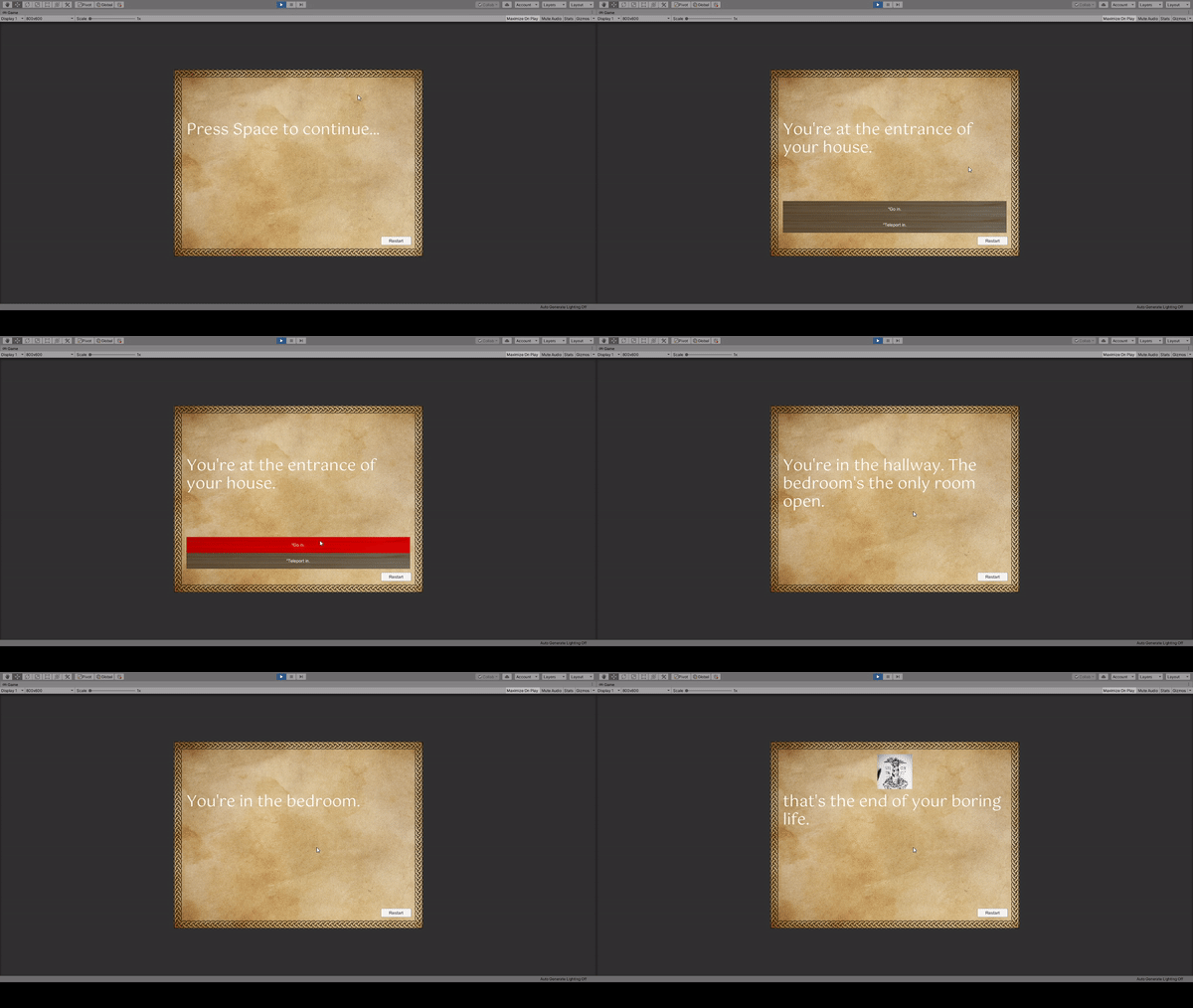
unity-texty
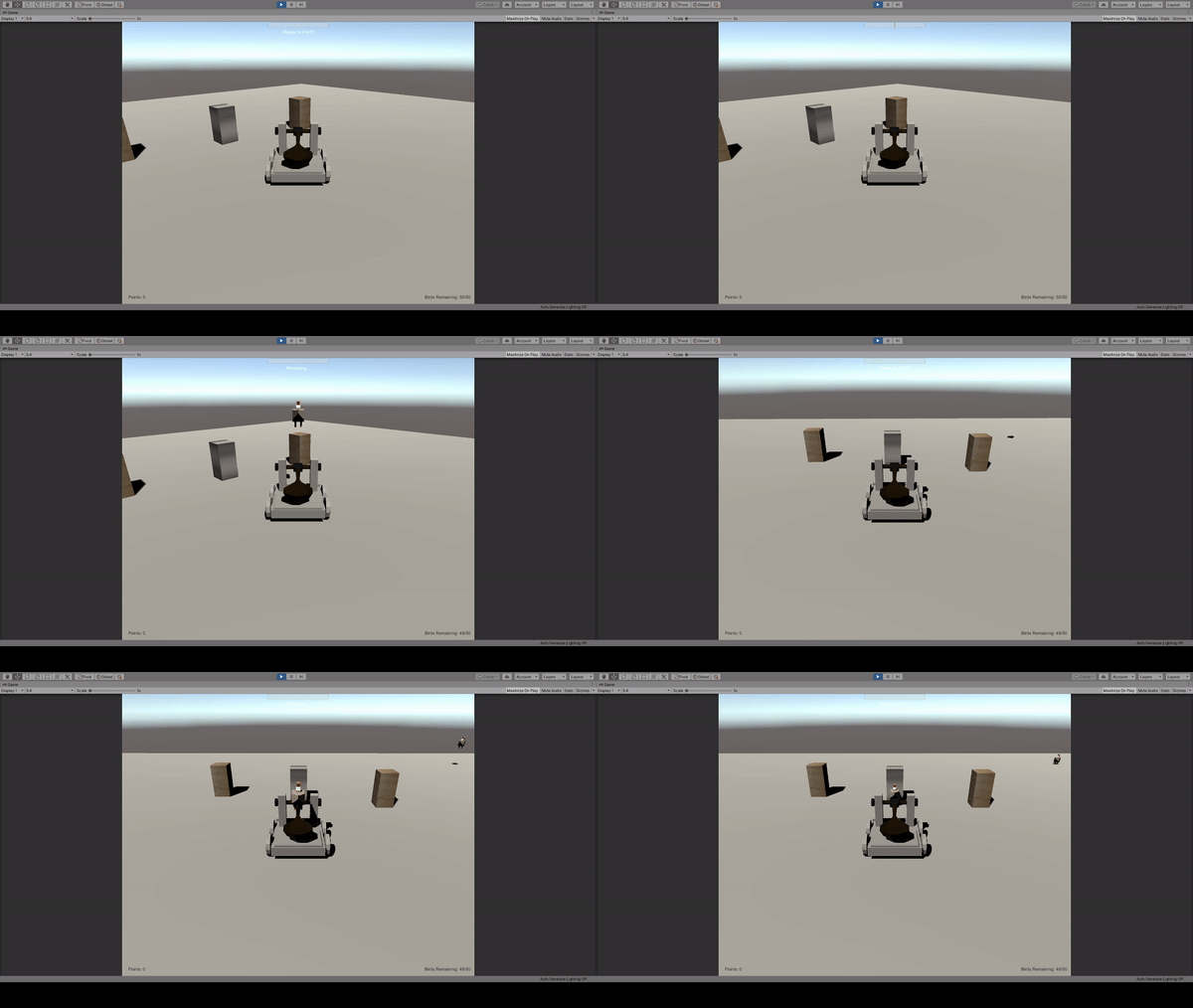
unity-angry-birds
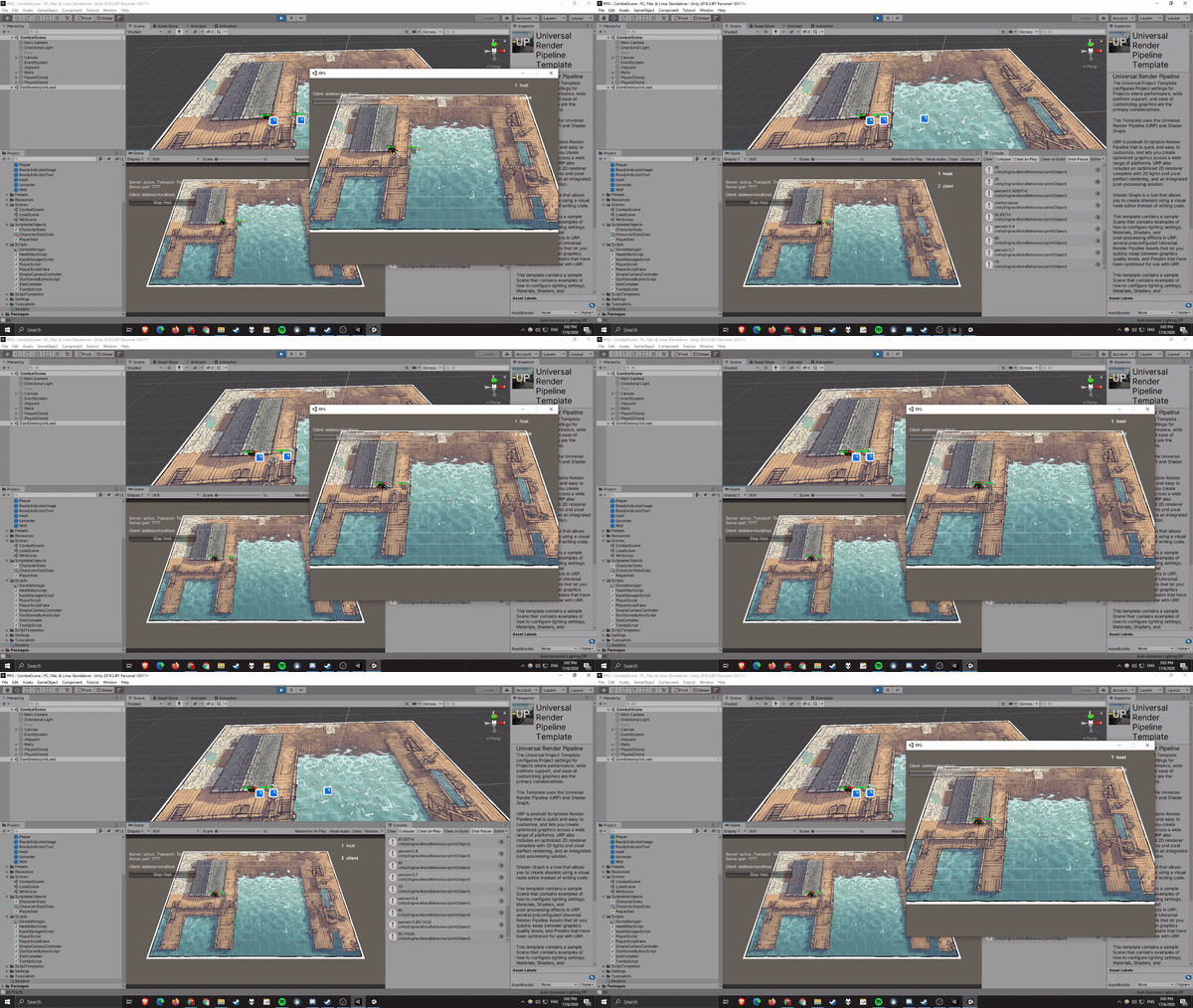
unity-mp-rpg
I’ve always found teaching interesting. Trying to change and improve the process through which I learnt it myself, like tweaking the explanation of certain concepts or using demonstrations appropriately, is challenging but satisfying. The Unity engine itself isn’t overly complicated — the basics are intentionally designed to be easy to pick up. Yet, it also offers much functionality and versatility to develop complex projects. We attempted to guide students through a thorough explanation of its basic concepts, and also encouraged them to explore all the possibilities it offered.
We only saw 2 lessons being carried out while our internship lasted though, although we hope to be able to help in the subsequent lessons. There were unanticipated misconceptions and issues that we had to refine on, but watching the students go through the process we once did as students was an odd sensation — like we had come full circle in a way, although we hope to develop our own games in Unity in the future as the next step as well.
Heirloom Project
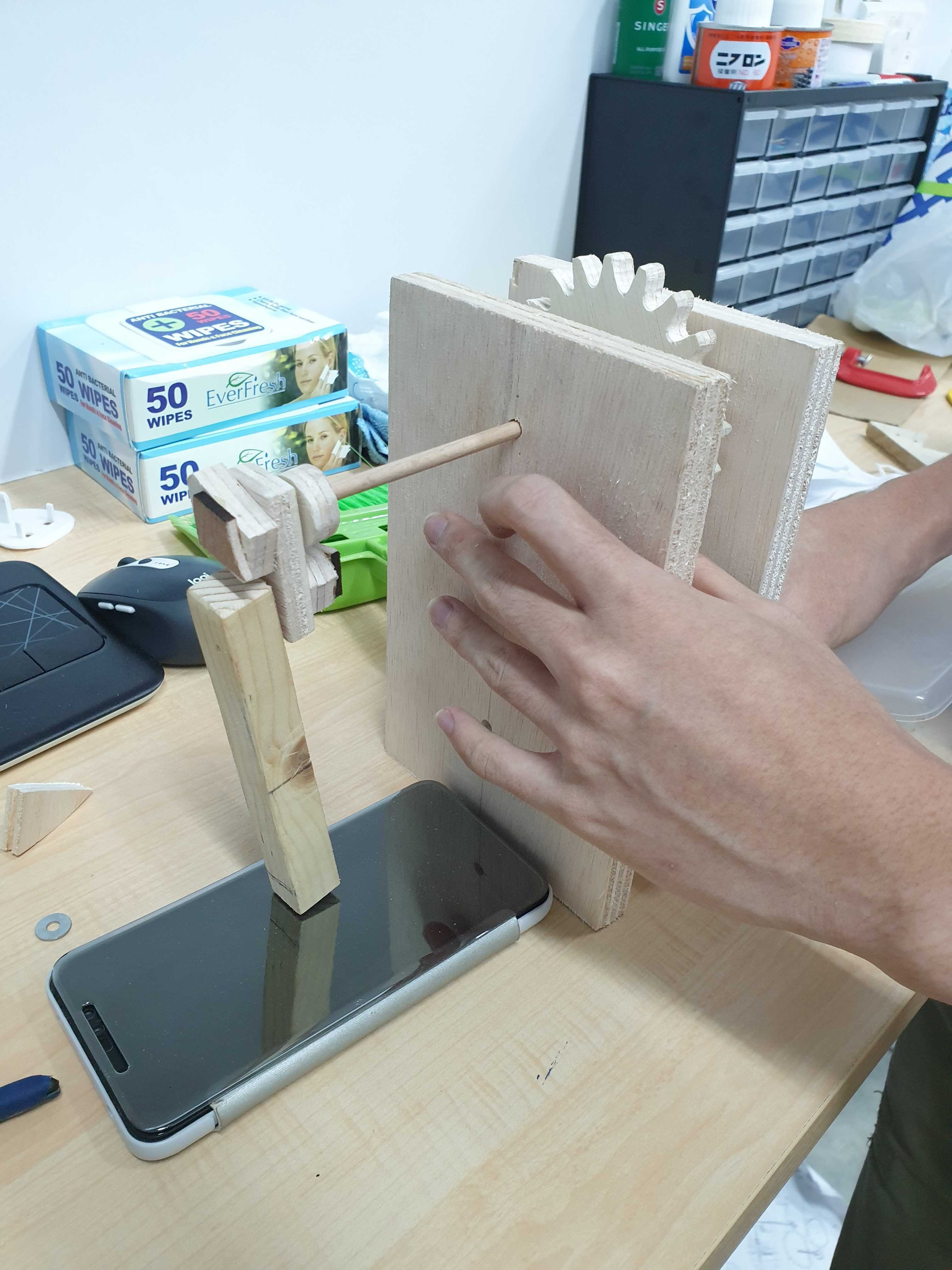
prototype!
We also worked on a project for a companion mobile app to a toy sewing machine. Planning out the project, with both its virtual and physical components was interesting. We built a prototype of the physical aspect of the kit using the workshop in the office, but it didn’t function perfectly, due to our inexperience with using the hardware. We intended to refine upon it, possibly using the laser cutter for more precision, but the ensuing pandemic ruined our plans. :(
Conclusion
The internship hasn’t been easy thus far — we had to learn many things to overcome the technical problems we faced with the Heirloom project, and in designing the Unity curriculum. Working from home because of the pandemic also made communication more difficult. But the entire journey has been enjoyable— chipping away at tasks on our Trello board one at a time, and finally seeing it all empty :)