

Interning at a Distance
Editor’s note: Amelia is a Computer Science student at Carnegie Mellon University, who was slated to joined us here in Singapore for a summer internship… until COVID-19 threw all travel plans into disarray. Despite not being able to fly over, Amelia bravely took on our first remote intern role from 12 time zones away, and she did superbly! We’re very grateful for her willingness to try this out, for all the invaluable help she provided on various projects, and for her professional and positive attitude. Here’s her story.
Saying that I was excited for my summer internship at Tinkertanker is an understatement. I was eager to learn from the coding curriculum creators, use the in-office makerspace/workshop, and meet other interns all while experiencing a country I’ve never been to. As coronavirus cases in the U.S. exponentially increased, it became clear that international travel would not be feasible. Luckily, Tinkertanker happily agreed to follow through with the internship, allowing me to work remotely from the States.
I was still excited for this opportunity, but I worried that remote working conditions coupled with a 12 hour time difference would make me feel far removed from the company. I assumed hands-on opportunities were no longer possible, and there would be fewer chances to learn new things. I’m very happy to say that all of these preconceived notions were proven wrong.
Tinkertanker was well-prepared when it came to virtual onboarding. I learned about the company’s routine procedures and communication platforms during orientation, and I was able to virtually meet the entire company by the end of my first day. I connected with other interns via group bonding activities, and I was assured that I could ask anyone in the company if I had any questions.
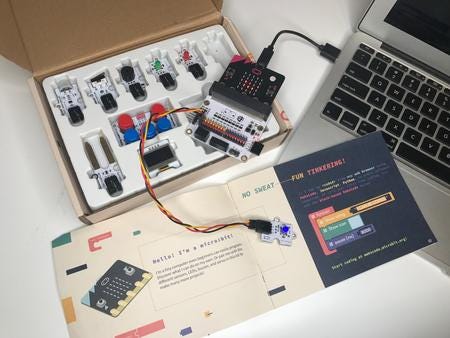
Tinkertanker mailed me some of the company’s products, specifically some of the kits used to build projects and curriculum around the BBC micro:bit. I was tasked with writing a parts library for the components included in these kits. The goal was to create an online resource where micro:bit users could learn how to integrate external parts without having to sift through overly complicated technical jargon. This would hopefully ease the learning curve and improve the user experience of working with the micro:bit.
Soon after I began writing the parts library, Yinjie and I started brainstorming more ideas to engage current students as well as pique interest of new students. We discussed how to reach a wider audience through video demonstrations. This was the beginning of the Parts Party playlist on the Tinkercademy YouTube channel. To supplement the resource library, I produced short and informative videos about different micro:bit parts. While the library would be effective in providing details and answering questions about parts, the playlist’s main purpose would be to introduce the component and give an overview of how it is used.
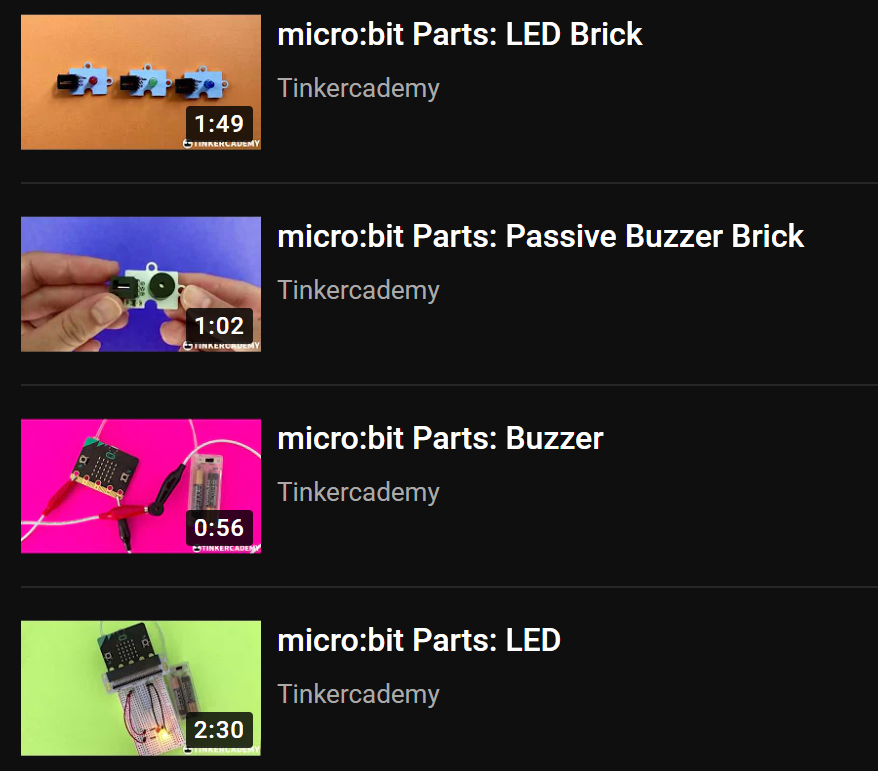
Watch the Parts Party playlist on Tinkercademy’s YouTube channel
Each video consisted of a brief description and a concise demonstration. In making these videos, I was granted lots of freedom as there were no previous procedures or templates to follow. Kickstarting this playlist alongside the parts library allowed me to work hands-on with the kits to create tutorials, while editing the videos allowed me to interact with and receive feedback from other members of the company. After establishing a routine with my makeshift recording setup, I soon standardized and documented the production process for future employees to follow. Knowing that I helped start a project with the potential to grow as others added to it was very rewarding.
I had a goal of learning at least one new skill during this internship. I was afraid that there wouldn’t be as many learning opportunities given the remote circumstances. However, there were so many online courses available to Tinkertanker employees. Even though I wasn’t required to pick up a new programming language for my assignments, I was still able to learn HTML and CSS this summer with the resources provided. I was encouraged to take advantage of these classes and learn as much as possible.
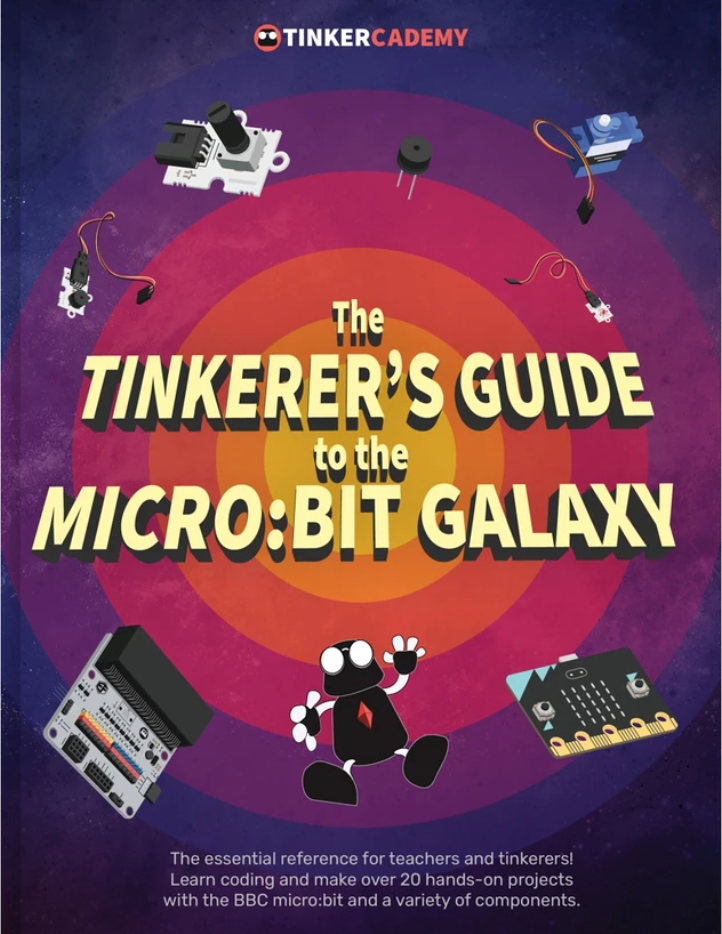
As the release of the company’s new book The Tinkerer’s Guide to the Micro:Bit Galaxy approached, Akmal asked me to help plan the book launch. I began researching book marketing strategies and platforms to host virtual events. Given COVID-19, the launch certainly needed to be held online. I had never organized a book launch before, and I knew that putting together a virtual event would require lots of planning and coordination. Fortunately, I was able to see an online book launch in action as Difference Engine was holding their launch for their comic book The Makers Club: Game on!
With these guidelines, I was able to gauge how the event should be planned. I put together a tentative agenda, and I made an outline of the presentation slides for the launch. I wrote a draft of topics to cover and questions to answer during the panelists’ discussion as well as some opening and closing remarks. To include an interactive activity, I created a Kahoot game with various micro:bit and Tinkertanker trivia. The launch happened August 22 and the book is now available!
Tinkertanker encouraged me to learn and grow while also emphasizing a healthy work-life balance. With all of the protests in addition to the coronavirus in the U.S. this summer, I was very grateful for their flexibility. I am lucky to have had this opportunity to work for Tinkertanker. It was very rewarding to work with a group of people that are shaping the minds of the next generation.