

Learnings From 2 Months Into My Job at Tinkertanker
Processes tend to flow smoothly in Singapore — as smooth as the soya beancurd pudding from Rochor Beancurd. Having experienced the joys of places like the Department of Motor Vehicles, I thought picking up my Singaporean work visa would provide a comparably irritating and time-consuming experience. In actuality, going to the service center to finalize the paperwork and to pick up the visa was a breeze. Also, contrary to what almost every Singaporean has told me, I find the MRT to be fairly efficient and painless. (I urge these individuals to try some of the other public transportation systems around the world.) NYC MTA, please take note: the trains in Singapore are clean, people queue to enter a crowded train car, and the electronic signage in stations clearly provides updates and train arrival times.
As someone who has studied cognitive science and held user experience (UX) positions, I’m very interested in how people experience and interact with the products they use and spaces they visit. Flipping through my memories of the last couple of months, there are a handful of UX mishaps that I can remember clearly. Yet, on the whole, I’ve been impressed by the UX and efficiency of systems in Singapore.
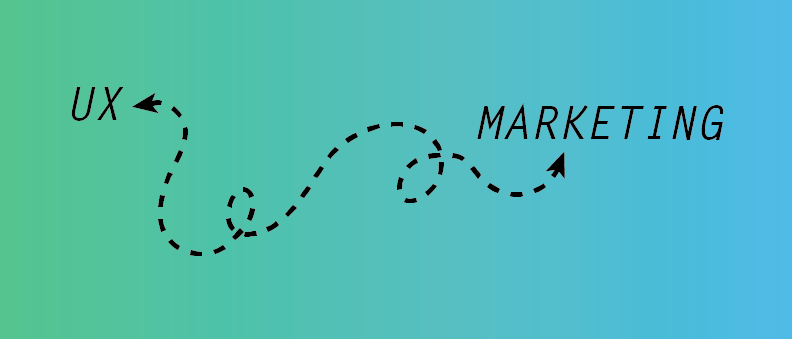
Similar to how I think about the UX of product and space designs, I’ve realized how crucial it is to also apply a UX perspective to marketing.
A good portion of my work at Tinkertanker is focused on marketing — trying to figure out how to optimize marketing for the company, exploring the channels to focus on in promoting new products and programs, and implementing these strategies. Working at a small company requires you to often wear many different hats to see projects to fruition. Whereas a large firm might have different roles such as the project manager, researcher, copywriter, and analyst, I have the opportunity to work in all of these roles. I’m doing market research, developing strategy, creating content, and pushing it out. It’s a great experience to be exposed to all of these facets, but it also means that sometimes certain parts don’t get the time, attention, and thought that would have ideally gone into them before the deadline. When I get feedback or look at the results of my work, I’m able to learn which areas need improvement for next time. It’s a continuous learning and growing process.
In thinking about Tinkertanker’s marketing objectives and strategy, I reflect on the company’s larger business goals. And when it was time to actually create the content for some of my initial ads, I was still standing in the marketer’s shoes. Looking at the outcomes from these initial ads I’ve launched, I’ve recognized that using a marketing mindset in ad creation is a flaw. Ads need to resonate with people and use the language that they use when thinking about the issue at hand — not the language and story that marketers ultimately want to illustrate to people. Of course this may be the larger goal, but ads need to strike a chord with their audience. Marketing is an incredibly people-centered discipline.
At its core, UX is about creating and enhancing something so that thing is accessible, supportive, easily comprehensible, user-friendly, and pleasant for the intended users. UX requires empathy and involves carrying out the appropriate research to best inform the design. I’ve gone back to my UX roots to apply this mindset to marketing. At Tinkertanker, I’ve created user personas of the target market, read local online forums and news articles on technology and education to get a sense of the language that people use in this scene in Singapore, and identified relevant keywords that people search when interested in products and classes related to the ones offered by Tinkertanker. Applying a UX outlook to marketing has helped me to take a more critical and informed position when making decisions about the campaigns I launch. This is an important idea I’ll take with me going forward: apply a UX perspective and UX principles to marketing.